
Have you ever stopped to think about the true meaning behind the “Definition of Subhanallah “? It’s not just any random word—it’s a heartfelt shout-out praising God and declaring Him pure and way above anything we can imagine.
Definition of Subhanallah
The definition of Subhanallah in a nutshell: It’s an Islamic declaration that confirms Allah is the holiest and totally detached from any flaw or comparison to His creation. It comes from the Arabic root “s-b-h,” meaning swimming in glory or complete purification.
Literal translation? “Glory to God Most High,” but its essence is deeper—it rejects any likeness between God and the created world.
The Quran’s packed with it, like in Surah Al-Isra (43): “And they fall upon their faces and they exalt [Him with praise].” The Prophet ﷺ repeated it so much that he said 33 times after prayer equals massive charity. This isn’t mere remembrance; it’s a shield against doubts and a key to a pure heart.
Picture this: Spotting a kid’s innocent laugh or rain pouring down—”Subhanallah” is the natural response that fills your soul with joy.
Join our Quran Classes for Adults to explore the meaning of Subhanallah in daily worship.
A Clear and Simple Explanation
Let’s break it down super easy, like for kids: Subhanallah = “Oh God, You’re the purest and highest above all we think of.” Like the wind—you can’t see it but feel its power. God is like that: present and mighty without human limits.
Simple Steps:
- Subhana: Means “I purify and elevate You.”
- Allah: The unmatched Greatest Name.
- The Whole Thing: My Lord has no equal, no flaw, no likeness.
Understand the classical meaning of Subhanallah in Modern Standard Arabic sessions.
What Subhanallah Truly Means in Islam
We often say Subhanallah throughout our day—during prayer or in different moments—but few people truly stop to reflect on what this phrase really means.
Subhanallah is not just a commonly repeated word; it represents a complete belief system. It affirms that Allah is absolutely perfect, sacred, and far beyond any human description.
This is why Al-Walid Quran Academy always emphasizes understanding before repetition, because remembrance becomes truly meaningful when its meaning reaches the heart and influences daily life.
Ladies can join Quran Classes for Ladies to practice dhikr and the correct use of Subhanallah.
Declaring the Perfection of Allah
When you say Subhanallah, you are clearly declaring that Allah is free from any flaw, flaw, or resemblance to His creation. The phrase confirms that Allah is perfect in His essence, His attributes, and His actions, with no comparison whatsoever between Him and anything He created.
Many scholars explained this concept, including Shaykh Ibn Baz, who stated that glorifying Allah means declaring Him far above anything that resembles creation—this is the foundation of sound Islamic belief.
From a linguistic perspective, the Arabic root s-b-ḥ carries the meaning of complete transcendence and absolute purity, not merely verbal praise. This makes Subhanallah a powerful statement of pure monotheism, pushing away every form of shirk or incorrect understanding of Allah.
The Quran repeatedly reinforces this meaning, including the verse from Surah Al-Isra’: (يُسَبِّحُونَ رَبَّهُمْ حَمْدًا) “They glorify their Lord with praise.” (17:44)
This verse highlights how glorifying Allah is inseparably linked to honoring Him with praise and elevation. The Prophet ﷺ also made Subhanallah a constant part of every unit of prayer, highlighting its great importance in daily worship.
Ibn Al-Qayyim beautifully described the effect of this phrase on the heart, explaining that it works like a remedy—cleansing the heart from any false or deficient perception of Allah.
Why Do Muslims Say Subhanallah?
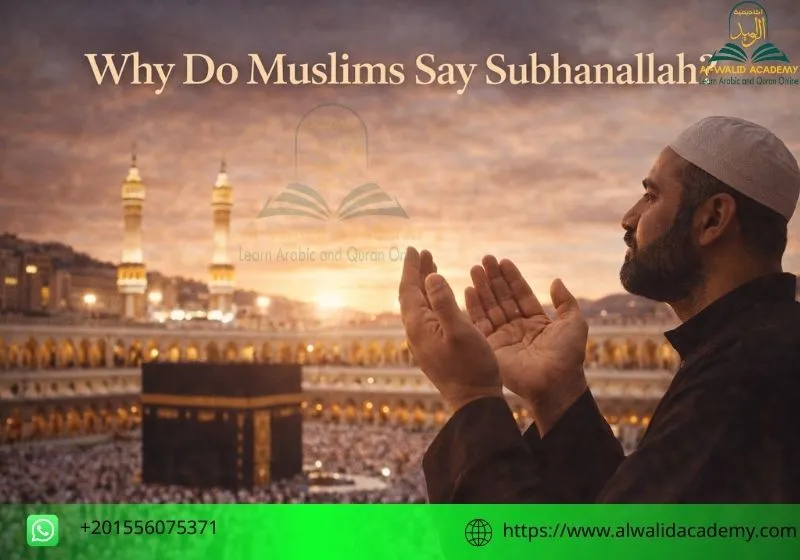
Almost every Muslim recites Subhanallah daily—during prayer, dhikr, or when witnessing something amazing.
But have you ever wondered what’s really behind this phrase? Subhanallah is not just a word; it’s a powerful tool for monotheism, a source of spiritual peace, and a way to increase your reward in the Hereafter.
Practice saying Subhanallah naturally in Online Arabic Conversation Classes.
Reasons Muslims Say Subhanallah
Here are the key reasons why this phrase is so central in a Muslim’s life:
- Glorifying Allah and Declaring His Perfection
When we say Subhanallah, we are announcing that Allah is free from any imperfection or resemblance to creation. This confirms that He is perfect in His essence, attributes, and actions. As Ali ibn Abi Talib (RA) explained: “Glorifying the majesty of Allah.”
- Daily Remembrance and Sanctification
The word itself reflects complete transcendence. During prayer, it is recited in bowing and prostration, demonstrating part of our monotheism and strengthening our connection with Allah.
- Increasing Reward and Forgiveness
The Prophet ﷺ said that saying Subhanallah 33 times after prayer equals a great charity (Bukhari), and 100 times daily wipes away sins like the foam of the sea (Muslim).
- Keeping Allah in Mind in Daily Life
This phrase acts like a spiritual anchor, keeping the heart constantly connected to the Creator and strengthening our sense of closeness to Him in every moment.
- Expressing Awe and Wonder at Creation
Muslims say it when witnessing something amazing in nature or miracles, like the sky, stars, mountains, or any extraordinary creation, reminding us that Allah is greater than anything in the universe.
- Spiritual Peace and Tranquility
Repeating Subhanallah calms the heart, removes worries and anxiety, and brings a sense of inner peace, like a natural remedy for the soul.
Purpose of Saying Subhanallah
The main purpose of saying Subhanallah is to glorify Allah and declare Him free from any flaw, defect, or similarity to His creation, affirming His absolute perfection in His essence, attributes, and actions.
- Ibn Abbas (RA) said: “Glorifying Allah above all evil.”
- The root of the word s-b-h literally means swimming in majesty or complete sanctification.
- That’s why Muslims recite it in prayer (during bowing and prostration) and in daily dhikr—it’s a fundamental part of faith, protecting the heart from false ideas.
Read about: Learn 40 hadith online
When Do We Say Subhanallah in Our Daily Life?
Almost every Muslim says Subhanallah daily, but not just anytime. This phrase has special moments that bring great rewards and soothe the heart.
Al-Walid Quran Academy will show you how to include Subhanallah in your daily routine correctly, so you can benefit spiritually and gain the blessings of monotheism in your life.
Common Daily Occasions
Here are everyday moments when “Subhanallah” flows naturally—use them to transform routine into worship.
- During prayer, It is recited at the start with “Subhanak Rabbi wa bihamdik” and also during bowing and prostration. After every obligatory prayer, saying it 33 times is recommended, as mentioned in Sahih Bukhari.
- In the morning or evening: Saying Subhanallah wa bihamdihi 100 times wipes away many sins. It doesn’t have to be exactly at sunrise or sunset.
- When witnessing something amazing: Whether it’s a breathtaking view, flowers blooming, or any miracle, the words naturally come out, just as the Prophet ﷺ would say when seeing creation.
- During times of stress or difficulty: It helps calm the heart and strengthens trust in Allah.
- While traveling or performing ablution: The phrase brings a sense of security and protection from harm.
Before sleep: It gives peace and safeguards your night.
Master pronunciation of Subhanallah in prayers with our Quran Recitation Course.
Easy Daily Routine Table
Make “Subhanallah” your simple habit—say it these times daily for peace and huge rewards before checking the table below.
| Daily Occasion | Times to Say | Reward for Your Heart |
| During Prayer | Every rak’ah + 33 at end | Focus & massive charity |
| Morning/Evening | 100 with praise | Sins gone like clouds |
| Awe at Beauty | As felt naturally | Inner joy & calm |
| Stress or Sadness | 15-25 repeats | Strength & trust |
| Travel or Sleep | 33 each time | Protection from harm |
Start today with Al-Walid Academy – Online Dhikr and Tajweed courses, with a full free week so you can feel the difference in your soul for yourself!
Subhanallah in the Qur’an
The Qur’an is full of the phrase Subhanallah in its proper places to guide us towards true devotion and strengthen our faith.
How the Phrase Is Used in the Qur’an
Subhanallah in the Qur’an is always used in the context of declaring Allah’s complete transcendence, free from any imperfection or association with partners:
- In Surah Yusuf (12:108): “قُلْ هَٰذِهِ سَبِيلِي أَدْعُو إِلَى اللَّهِ ۚ عَلَىٰ بَصِيرَةٍ أَنَا وَمَنِ اتَّبَعَنِي ۖ وَسُبْحَانَ اللَّهِ ۖ وَمَا أَنَا مِنَ الْمُشْرِكِينَ” – “Say, ‘This is my way; I call to Allah with insight, I and those who follow me. And Subhanallah, I am not of the polytheists.’” – The Prophet ﷺ declares his innocence from any form of shirk.
- In Surah Al-Anbiya (21:22): “لَوْ كَانَ فِيهِمَا آلِهَةٌ إِلَّا اللَّهُ لَفَسَدَتَا ۖ فَسُبْحَانَ اللَّهِ رَبِّ الْعَرْشِ عَمَّا يَصِفُونَ” – “If there had been in the heavens and the earth other gods besides Allah, they both would have been ruined. So, Subhanallah, the Lord of the Throne, above what they describe.” – Responding to the notion of multiple gods.
- In Surah Al-Furqan (25:18): “مَا اتَّخَذَ اللَّهُ مِنْ وَلَدٍ وَمَا كَانَ مَعَهُ مِنْ إِلَٰهٍ إِذًا لَذَهَبَ كُلُّ إِلَٰهٍ بِمَا خَلَقَ وَلَعَلَا بَعْضُهُمْ عَلَىٰ بَعْضٍ ۚ سُبْحَانَ اللَّهِ عَمَّا يَصِفُونَ” – “Allah has not taken a son, nor is there any deity with Him. Otherwise, each god would have taken what he created, and some of them would have been over others. Subhanallah, above what they describe.” – Declaring Allah’s transcendence over offspring or partners.
- The context is always about negating misconceptions while glorifying Allah, like in Surah An-Nazi’at (79:44): “وَاسْتَكْبَرُوا وَقَالُوا أَمْرُهُمْ سَوَاءٌ” – “They were arrogant and said, ‘Their affair is all the same.’”, or regarding the angels as in Surah Al-Baqarah (2:116).
Key Verses Table
Here’s a table showing the main verses where Subhanallah is mentioned, along with the context and the lesson you can take:
| Surah & Verse | Main Context | Lesson to Learn |
| Yusuf 108 | Denial of shirk | Affirmation of the Prophet ﷺ’s monotheism |
| Al-Anbiya 22 | Response to multiple gods | Everything fails without one God |
| Al-Furqan 18 | Denial of offspring | Each god would have control over their creation |
| An-Nazi’at 44 | Creation of the Hour | Allah’s absolute power |
| Al-Isra 43 | Angels prostrating | Glorification in worship |
You can now memorize these verses and experience each recitation of Subhanallah with a living heart, through the Quran Memorization Course, and your first week is completely free to feel the difference for yourself!
Learn Quran, Arabic, and Islamic Studies with certified teachers in fun, interactive, and personalized sessions. Join thousands of students around the world and begin your path today!
Subhanallah in the Teachings of the Prophet
The Prophet ﷺ used to repeat Subhanallah frequently throughout his day and taught us that it is one of the greatest forms of dhikr: light on the tongue but heavy on the scales of good deeds.
Examples from Authentic Hadiths
These hadiths highlight the great virtue of saying Subhanallah:
- From Abu Huraira in Bukhari: “كلمتان حبيبتان للرحمن خفيفتان على اللسان ثقيلتان في الميزان: سبحان الله وبحمده، سبحان الله العظيم” “Two words beloved to the Most Merciful, light on the tongue, heavy on the scale: Subhanallah wa bihamdihi, Subhanallah al-‘Azim” – Saying them brings joy to the angels and makes your scale of deeds very heavy.
- Aisha (RA) said: The Prophet ﷺ used to often say سبحان الله وبحمده أستغفر الله وأتوب إليه” “Subhanallah wa bihamdihi, Astaghfirullah wa atubu ilayh” throughout the day, reaching thousands of times daily.
- From Abu Umamah in Muslim: The Prophet ﷺ advised saying “سبحان الله عدد ما خلق، سبحان الله رضا نفسه، سبحان الله وزنة عرشه، سبحان الله مداد كلماته” “Subhanallah as many times as He created, Subhanallah in His own pleasure, Subhanallah in the weight of His Throne, Subhanallah as the ink of His words” – A dhikr so great its reward surpasses all of creation.
- Also in Bukhari, after prayer: 33 times Subhanallah, 33 times Alhamdulillah, 33 times Allahu Akbar, and 34 times La ilaha illa Allah – all this equals freeing ten slaves. The Prophet ﷺ would also say these in bowing and prostration, and when he saw any beauty in creation, like stars or rain.
Learn more about: Online Quran classes on Skype and Zoom
The Difference Between Subhanallah and Alhamdulillah
Many people say “Subhanallah” and “Alhamdulillah” together, but each one has its own distinct meaning.
How Glorification Differs from Praise
In simple terms:
- Subhanallah: This declares the perfection of Allah, free from any flaw or resemblance to creation. It’s like saying, “O Lord, You are perfect, pure, and far above any imperfection.”
- Alhamdulillah: This is gratitude and praise for all the blessings Allah has given you, like saying, “O Lord, all good comes from You, and You deserve all thanks.”
Scholars like Ibn Abbas explained that subhan purifies the heart from doubts, while alhamd strengthens faith and fills the heart with thankfulness for blessings.
A practical example: if you see a beautiful scene, like rainfall or a sunset, you can say Subhanallah to express awe at Allah’s perfect power, and then say Alhamdulillah to thank Him for the blessing.
In prayer, you can say both together, or simply say Subhanallah wa bihamdihi to combine them in one phrase and earn great reward, just like in the hadith of Abu Huraira in Bukhari.
| Phrase | Core Meaning | Daily Example | Main Reward |
| Subhanallah | Glorifying Allah as perfect | Amazing creation scene | Purification of the heart |
| Alhamdulillah | Thankfulness for blessings | Blessings like health or provision | Filling the scale with good deeds |
| Both Together | Complete glorification + praise | After prayer 33 times | Best of all dhikr |
Start applying this difference in your daily dhikr with our Quran courses online, first week completely free, so you can learn proper dhikr and live its meaning every day!
Benefits of Saying Subhanallah
Do you say “Subhanallah” every day but don’t really feel its true power? Know that it’s not just a word—it’s a spiritual treasure that can change your life from the inside out.
Spiritual and Personal Impact
Saying “Subhanallah” has an amazing effect on your heart and soul:
- It erases sins like the froth of the sea if said 100 times a day (Hadith Muslim).
- It fills your scale with huge rewards in the Hereafter, even though it’s light on the tongue (Bukhari).
- It purifies the heart from doubts and increases your focus and devotion in prayer.
- It brings inner peace and reduces stress, as repeating this dhikr has been shown to calm the nerves and improve mood.
Also, Subhanallah opens the doors of blessings and sustenance because it is beloved to the Most Merciful, and it strengthens your faith when you witness Allah’s creation—like stars or rain—making you feel closer to Him.
Scholars like Ibn Baz said it is the best dhikr after prayer, recited 33 times, and it protects you from whispers of doubt while increasing reliance on Allah during hardships.
Daily Benefits Table
Here’s a simple breakdown of how saying Subhanallah daily can transform your heart, mind, and life:
| Benefit | Authentic Hadith | Effect in Your Life |
| Erasing sins | 100x = froth of the sea | Pure and light heart |
| Filling the scale | Light yet heavy (Bukhari) | Guaranteed Paradise |
| Inner peace | Daily repetition | Calm sleep and relaxation |
| Sustenance and blessing | Beloved to Allah | Better material life |
| Devotion in prayer | 33 after each obligatory prayer | More accepted prayers |
How to Explain Subhanallah to Non-Muslims
Many non-Muslims often ask about the phrase “Subhanallah”. You can say it in moments of joy, sadness, or amazement to calm yourself and feel inner peace.
Simple Tips for Explaining
- Compare it to “Amazing!” but stronger because it denies any imperfection.
- Daily example: “When a baby takes its first steps – Subhanallah! The perfection of creation.”
- Its effect: it calms the heart and increases positivity without many words.
Read about: How I Became Muslim
Understanding the Meaning Without Religious Complexity
Understanding Subhanallah is very simple: it means “Glory be to Allah” or “Allah is perfect and completely pure.”
For instance, when you notice a tree flourishing naturally or watch a baby smile innocently, saying Subhanallah reflects your amazement at a perfection beyond human ability.
You don’t need to explain monotheism or shirk—just tell them it’s like saying “Wow, perfect!” but deeper, declaring that the Creator is above any flaw or mistake, like the sun shining without needing anything.
A practical example: if a non-Muslim sees a beautiful sunset, you can say: “Subhanallah – it means the Creator made something absolutely perfect!” They will understand that it expresses admiration and Allah’s perfection, as scholars say it’s “Allah’s innocence from all defects.”
Read more: New Muslim Convert Guide
Common Misunderstandings About Subhanallah
A lot of people misunderstand the phrase “Subhanallah” and use it in ways that reduce its true reward and blessing. These are the mistakes and here’s how to say it correctly to get the full benefit every day.
What People Often Get Wrong
Many assume Subhanallah is just casual amazement, but common mistakes rob it of spiritual power—here’s what to fix:
- Thinking it’s just a word of amazement
Many say Subhanallah like “Wow!”, but actually it means declaring Allah’s perfection and freedom from any flaw or resemblance to creation, not just reacting to something you like.
- Using it wrongly in difficult situations
Some say Subhanallah for what happened as if it’s about complaining or sadness. The correct use is for glorifying and praising Allah, not expressing regret or sorrow.
- Believing it’s less important than Alhamdulillah
Some think Alhamdulillah is better, but the Prophet ﷺ said: “Subhanallah wa bihamdihi” is the best dhikr, light on the tongue but heavy on the scale.
- Directing it to things other than Allah
Like saying Subhan al-Tib (Glory be to medicine) or anything human-made. This is wrong because Subhanallah is for Allah alone.
- Saying it without intention or awareness
If you say Subhanallah without your heart being present or understanding its meaning, it’s just empty words. The solution is to intentionally declare Allah’s perfection with full awareness and sincerity
Simple Summary of the Meaning of Subhanallah
If you want to summarize the meaning of Subhanallah in one sentence, it will help you understand it deeply and feel its spiritual impact:
One Key Meaning to Remember
“Subhanallah” = Allah is perfect and pure 100%, without any flaw or deficiency.
Just like you’d say about the sun: “You shine without needing anyone,” Allah is completely above any imperfection or resemblance to His creation.
This phrase is more than words – it purifies the heart, mind, and soul. The Prophet ﷺ described this remembrance by saying it is “light on the tongue, yet heavy on the scale,” highlighting its great reward despite how easy it is to say.
Unlock Subhanallah Mastery with Al Walid Academy
Discover the true power of “Subhanallah” with Al Walid Academy – we’ll help you live its full meaning and rewards in your daily life!
Our programs focus on teaching dhikr and Tajweed in the same way explained in this article, helping you pronounce Subhanallah properly and truly experience the calm it brings.
- Live Tafsir Courses: Understand Quran verses containing Subhanallah with certified sheikhs.
- Daily Dhikr Training: Routine of 33x + 100x with personal progress tracking.
- Practical Tajweed: Perfect pronunciation of Subhanallah with angelic voice + your recordings.
- Community of 10,000+ Students: Share experiences with sisters in Egypt and worldwide.
- Flexible Online: Live lessons from Cairo fitting your busy schedule.
Ready for spiritual transformation? Enroll Now – Full Week Free! Your first step to blessings is open!
Conclusion
“Subhanallah” isn’t just a passing word—it’s a gateway to true khushu’ (devotion) and massive rewards that will transform your spiritual life completely—from glorifying Allah in the Quran, to the Prophet’s teachings, your daily moments, and its proven psychological benefits.
Take the First Step Today:
- Simple Routine: 33 times after every prayer + 100 morning and evening.
- With Walid Academy: Free full-week course – Enroll now and invest in your scales.
Say it now with a living heart: Subhanallah, Subhanallah, Subhanallah – and get ready for the blessings coming your way!
FAQs
Can I say Subhanallah while exercising or running?
Sure! When you’re running or working out, say “Subhanallah” to remind yourself your body is Allah’s blessing and He gives the strength. It turns exercise into worship, just keep your intention for closeness to Him, not just fitness.
Is there a specific night time for saying Subhanallah?
The last third of the night is pure magic! Allah descends saying, “Who calls Me so I answer,” so “Subhanallah” then is like a key unlocking mercy. Try it an hour before Fajr – you’ll feel your voice reaching Him directly.
Do men say it loudly while women whisper?
Men say it clearly so angels hear and record it, while women soften their voice for modesty. The Prophet recited it audibly in prayer, but for private dhikr, everyone did so according to their situation.
If I forget to say it all day, do I make up for it the next day?
Don’t worry, Allah is forgiving! If you miss a day, continue what you can without counting – consistency matters more than quantity. Make up with 33 times before bed as quick compensation.
Does Subhanallah help with studying and exams?
It makes a huge difference! Before an exam, say it 20 times, focused – it calms nerves and unlocks memory like a key. Those who study while praising understand faster with a pure heart. Try it and watch your grades soar.