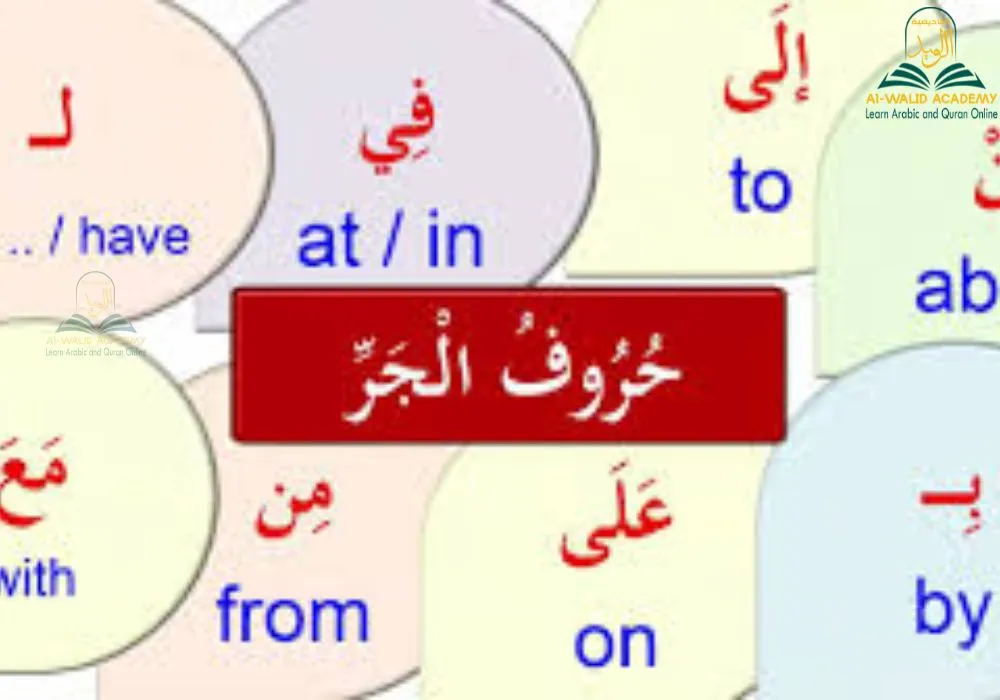

Learning Arabic or studying the Quran online often brings up the topic of Arabic Prepositions while reading and trying to understand sentences. Prepositions in Arabic play an essential role in clarifying meanings and connArabic Prepositionsecting words within a sentence correctly.
What Are Arabic Prepositions?
In Arabic, there are small words that have a big impact on the meaning of a sentence, and these are what we call Arabic Prepositions. Even though they are short, they play a crucial role in Modern Standard Arabic, especially for anyone learning Arabic or reading the Quran.
Simply put, prepositions are words that come before a noun to show its relationship to the verb or the rest of the sentence. They can indicate place, direction, reason, or connection between things. Some of the most common prepositions are: ,بـ , لـ , في, على, كـ , من, إلى, عن.
For example:
- The book is on the table.
- I went to the mosque.
- I left from the house.
Each preposition shows a different relationship between words, making the sentence connected and meaningful. In Arabic texts, especially in the Quran, Arabic Prepositions appear frequently.
For example, in the phrase “بسم الله الرحمن الرحيم”, the preposition “بـ” indicates seeking help and starting in the name of God.
So, understanding Arabic Prepositions isn’t just memorizing words—it’s a key step for anyone who wants to fully grasp Arabic meanings.
Definition of Prepositions in Arabic
Simply put, Arabic prepositions are small words that come before a noun to connect it to the rest of the sentence and clarify the relationship between it and the verb or other words.
This relationship could indicate place, time, direction, or reason. Some of the most common prepositions in Arabic are:
بـ – لـ – في – على – من – إلى – عن – كـ
For example:
The book is on the table (الكتاب على الطاولة)
Here, the word على is a preposition, showing the location of the book relative to the table.
A small change in the preposition can lead to a completely different meaning:
- I went to school (ذهبت إلى المدرسة).
- I returned from school (عدت من المدرسة).
Even though the sentences look similar, their meanings are different because of the preposition.
In Arabic, especially in Modern Standard Arabic, the noun after a preposition is usually in the genitive case. Even without deep grammar knowledge, understanding this concept helps learners form correct and meaningful sentences.
Why Prepositions Are Important in Sentence Structure
Prepositions play a fundamental role in building Arabic sentences. Without them, sentences could be incomplete or unclear.
For example:
I saw the man (رأيت الرجل).
The sentence is understandable, but adding a preposition makes it more precise:
I saw the man in the market (رأيت الرجل في السوق).
Here, the preposition في clarifies the location, making the sentence much clearer.
Prepositions also help link different parts of a sentence. They indicate relationships such as:
- Place: in the house – on the table.
- Direction: to school.
- Source or origin: from the city.
- Means or reason: by knowledge – by work.
The more learners understand how to use prepositions, the easier it becomes to read Arabic texts and construct correct sentences in writing and speaking.
Learn Arabic Prepositions effectively in our Quran courses online for all ages.
How Arabic Prepositions Differ from English
Although prepositions exist in both Arabic and English, there are clear differences between them.
In English, prepositions like in, on, to come directly before a noun, for example:
- in the house.
- on the table.
In Arabic, prepositions also come before the noun, but they often affect the form of the word grammatically. The noun following the preposition is usually in the genitive case.
For example:
- في البيت (in the house).
- للمعلم (to the teacher).
In the second example, the preposition لـ merges with the noun to form للمعلم.
Another difference is that some verbs in Arabic require specific prepositions for the sentence to be correct, whereas in English, a different preposition might be used.
For example:
- I thought about the topic (فكرت في الموضوع)
Learning Arabic Prepositions requires practice and plenty of examples. Over time, learners start recognizing patterns in sentences, which makes using prepositions easier and more natural.
Learn also about: Harakat In Arabic Language
Learn Quran, Arabic, and Islamic Studies with certified teachers in fun, interactive, and personalized sessions. Join thousands of students around the world and begin your path today!
List of Common Arabic Prepositions
In Arabic, there are small but very important prepositions that clarify the relationships between words and make sentences clear and understandable. The basic list includes about 14 prepositions, but the 10 most commonly used are: بِ, لِ, فِي, عَلَى, مِنْ, إِلَى, عَنْ, كَ, بَيْنَ, حَتَّى.
Each preposition has a specific role:
- بِ: indicates means or association, e.g., “بالقلم” (with the pen).
- لِ: indicates ownership or purpose, e.g., “لكتاب” (for the book).
- فِي: indicates place or time, e.g., “في المدرسة” (in the school).
- على: indicates position above something, e.g., “على الطاولة” (on the table).
- من: indicates origin or separation, e.g., “من البيت” (from the house).
Example in a daily sentence: “الولد في المدرسة مع أصحابه”, Here, في and مع connect the words and clarify their relationships, making the sentence complete and easy to understand.
If you are learning Arabic for the Quran or daily communication, focus on these prepositions.
Learn also about: Sun and Moon Letters Arabic
Basic Prepositions for Beginners
For beginners, it’s best to start with the essential prepositions you’ll see every day. The most important are:
- بـ: means “with” or “by,” e.g., “بقلمي” (with my pen).
- لـ: indicates ownership or purpose, e.g., “لكتاب” (for the book).
- في: for place or time, e.g., “في البيت” (in the house).
- على: indicates position above something, e.g., “على الجبل” (on the mountain).
- من: indicates origin or separation, e.g., “من مصر” (from Egypt).
These are the five prepositions you’ll use daily in speech and writing, and each affects the noun that follows it, usually with a genitive case. Try writing simple sentences like:
“أكتب بقلم على الورقة”
You’ll notice the sentence becomes clearer and more natural, and these prepositions will stick in your mind faster.
Frequently Used Prepositions in Daily Arabic
In everyday Arabic, certain prepositions appear frequently and make communication smoother. The most commonly used include:
- إلى: for direction or destination, e.g., “إلى المدرسة” (to school).
- عن: for distance or talking about something, e.g., “أتحدث عنك” (I talk about you).
- مع: for accompaniment, e.g., “مع صديقي” (with my friend).
- مثل: for comparison, e.g., “مثل الأسد” (like the lion).
- بين: for position or separation, e.g., “بين البيتين” (between the two houses).
Focusing on these prepositions helps you speak Arabic naturally and smoothly since they appear in most daily sentences.
Try to listen to Egyptian songs or videos and notice how these prepositions are used naturally—they’ll help you get used to them quickly and use them fluently.
Learn also about: What Does Hamza Do in Arabic
Prepositions Found in the Quran
The Quran is full of prepositions, and understanding them gives depth and clarity to the meanings. Each preposition in the verses has a specific role, whether indicating place, time, or the relationship between nouns and verbs. Some examples:
- بِ in “بِسْمِ اللَّهِ” → meaning “in the name of”.
- لِ in “لِلَّهِ الْحَمْدُ” → indicating ownership for God.
- فِي in “فِي السَّمَاوَاتِ وَالْأَرْضِ” → indicating place.
- عَلَى in “عَلَى اللَّهِ تَوَكَّلْ” → indicating reliance.
- مِنْ in “مِنْهُمْ مُنَافِقُونَ” → indicating source or separation.
- إِلَى in “إِلَى اللَّهِ مَرْجِعُكُمْ” → indicating final direction.
- عَنْ in “عَنِ الْحَقِّ” → indicating distance or the subject.
These prepositions are not random; they highlight meaning and teach lessons, like “من” showing separation from evil.
If you’re memorizing the Quran, focus on these prepositions in short surahs like Al-Ikhlas—they’ll help you understand the verses better and memorize them more quickly.

Arabic Prepositions with Examples
Arabic prepositions become much clearer when we see them used in real examples. This helps you understand them quickly and apply them in daily life or while memorizing the Quran. For example:
- بِ in “أشرب بكوب” → means “with the cup”.
- لِ in “هدية لأختي” → shows ownership.
- فِي in “ننام في الليل” → indicates time.
- عَلَى in “الصورة على الحائط” → indicates position on something.
- مِنْ in “فاكهة من السوق” → indicates origin or source.
Also, in the Quran: “فِي بُيُوتٍ أَذِنَ اللَّهُ” → here في shows the interior place. These examples not only explain the meaning of the prepositions but also let you practice creating your own sentences. The more you swap words and try new examples, the faster you’ll master them.
Prepositions in Simple Sentences
The best way to understand Arabic prepositions is by using them in simple sentences so you can see their effect clearly. For example:
- الكتاب في الحقيبة → في specifies the location.
- الطالب يدرس على السرير → على indicates position above something.
- جيت من البيت → من indicates origin or source.
- أكتب بقلم جديد → ب shows the tool.
- الرسالة لأبي → ل indicates ownership.
- روح إلى السوق → إلى shows direction.
To practice effectively, take daily words like “house,” “car,” or “food” and write 5 sentences for each preposition. You’ll notice how each preposition completes the meaning of the sentence, which helps beginners understand connections quickly and form correct, fluent sentences.
Learn also about: Learn Arabic Words with Long Vowels
Prepositions with Nouns and Pronouns
When prepositions come with nouns or pronouns, they slightly change in pronunciation and interact with them. For example:
- في الْبَيْتِ → with a noun in the genitive case.
- فِيهِ → في + هو, meaning “in it”.
- لِلْوَلَدِ → ل + الولد.
- لَهُ → for him.
- عَلَى الْمَكْتَبِ → على + المكتب.
- عَلَيْهِ → on him.
Pronouns help shorten sentences, like “أنا معَكَ” instead of “معك أنت.” A common question: how do you know which pronoun to use? Each preposition has its proper pronoun, e.g., بِ + هم = بِهِمْ. Try sentences like “الكتاب لَهُمْ”, and you’ll get used to the correct grammar and natural pronunciation in speech or reading.
Read also about: How To Combine Pronouns And Verbs In Arabic
Transliteration and English Meaning
To make learning and pronunciation easier, here’s a simple transliteration with English meaning:
- بِ – bi → with / by
- لِ – li → for / to
- فِي – fi → in / at
- عَلَى – ‘ala → on / upon
- مِنْ – min → from / of
- إِلَى – ila → to / towards
- عَنْ – ‘an → about / from
- كَ – ka → like / as
- بَيْنَ – bayna → between
- حَتَّى – hatta → until
Practical example from the Quran: “بِسْمِ اللَّهِ” → bismi Allah = in the name of Allah. Using transliteration is very important, especially for letters that are hard to pronounce like ‘Ayn or Ha “.
If you start with transliteration, you’ll pronounce the letters correctly the first time, then you can smoothly switch to reading Arabic.
Grammar Rules for Arabic Prepositions

Arabic prepositions are not hard to learn, but you need to master them so your sentences are correct and easy to understand.
The basic idea is that every preposition makes the word after it take the genitive case (Majroor), usually marked with a kasra or a yaa for plurals. Also, these prepositions don’t stand alone and often merge with “الـ” like لِلْ.
For example: “ذهبتُ إِلَى الْمَدْرَسَةِ”, here إلى shows direction and the word after it is in the genitive case.
Once you understand this rule and apply it daily—whether in Quran reading or everyday sentences—you’ll notice how each preposition precisely affects the meaning of the sentence.
Read also about: The Grammar of Using Arabic Numbers
The Concept of Majroor (Genitive Case)
The genitive case (Majroor) is the state of a noun that comes after a preposition. It’s usually marked with a kasra to show its connection with the preposition.
For example: “في الْبَيْتِ”, here “البيت” is Majroor. In simple terms, prepositions change the case of the word that follows them, which is a fundamental rule in Arabic grammar.
If the noun is singular, it takes a kasra; if it’s dual, it ends with -يْنِ; and if it’s plural, the ending depends on the type of plural, e.g., “على الْجَبَلَيْنِ”.
Understanding this is essential because without the genitive case, the sentence wouldn’t be grammatically correct, and comprehension of the Quran would be harder, as in “رَبِّ السَّمَاوَاتِ وَالْأَرْضِ”, where every preposition plays a key role in the meaning.
How Prepositions Affect Word Endings
Prepositions directly affect the ending of the word that follows them, which is visible in Arabic grammar as the following:
- Usually, the word takes a kasra or yaa for plural, and if the word is definite, it merges with the preposition, e.g., “لِلْكِتَابِ” instead of “لِ الْكِتَابِ”.
- Also, if the noun was previously in the accusative case, it changes to genitive after the preposition, like: “رأيت الولدَ في الْبَيْتِ” → “الولدَ” is accusative, but “الْبَيْتِ” becomes genitive.
- With pronouns, it gets even simpler, like بِهِ, عَلَيْهَا. Try removing the preposition from a sentence—you’ll notice how the ending changes and the meaning becomes unclear.
This makes reading smoother and helps with memorization without grammatical mistakes.
Read more about: Is Arabic A Hard Language To Learn
Common Mistakes Learners Make
When it comes to learning Arabic prepositions, beginners often make some common errors. Here’s a quick guide to the mistakes and how to avoid them:
- Writing “في الْبَيْتَ” instead of “في الْبَيْتِ” (forgetting the kasra).
- Confusing في and على, like “على الْبَيْت”, which literally means “on the house” rather than “inside the house.”
- Failing to merge the preposition with the noun, e.g., writing “لِ الكتاب” instead of “لِلْكِتَابِ”.
- Translating prepositions literally from English, like “in the house,” without adjusting for Arabic grammar.
- Reading Quranic phrases incorrectly, e.g., “بِسْمِ اللَّهِ” without proper assimilation (Idgham).
Tips to fix these mistakes:
- Read out loud regularly to hear the correct endings.
- Practice 10 sentences per day using different prepositions.
- Use grammar apps or simple exercises to reinforce the rules.
By practicing consistently, you’ll avoid these common errors and start speaking Arabic fluently and confidently.
Arabic Prepositions with Attached Pronouns
Arabic prepositions attach to pronouns to create compact and natural expressions. For example, instead of saying “في أنتَ”, you say “فِيكَ”, where the preposition merges with the pronoun and changes form depending on the person: أنا, أنتَ, هو, هي, هم… Common examples like بِهِ, لَهَا, فِيهِمْ all end with a kasra.
In daily life, you might say “الْمَفْتَاحُ مَعَكَ” (The key is with you), or in the Quran: “رَحْمَةٌ مِنْ رَبِّنَا” (Mercy from our Lord). This method answers the question “How do I connect prepositions with pronouns?” easily.
Try writing a short story with 5 linked sentences, and you’ll see your sentences become smoother and clearer.
Learn more about: Object Pronouns in Arabic
How Prepositions Connect to Pronouns
Prepositions merge with pronouns in a special way, changing their form and creating a natural flow in sentences.
When prepositions attach to pronouns, they undergo assimilation, meaning the preposition and pronoun merge into a new form. For example:
- فِي + هُو = فِيهِ → “in him”
- عَلَى + هَا = عَلَيْهَا → “upon her”
This happens because pronouns usually end with a vowel (fatha or dhamma), and the preposition modifies it to a kasra to pronounce correctly.
Not all prepositions behave the same; for instance, بِ becomes بِهِ and لِ becomes لَهُ. By memorizing the pronoun table (he, she, they…), sentences become faster and easier. This is very clear in the Quran, for example: “بِهِمْ رَحْمَةٌ”.
Read about: Demonstrative Pronouns in the Arabic Language
Examples with Translation
Seeing examples helps you understand how prepositions attach to pronouns and how meaning is shaped.
- الْكِتَابُ لَهُ → “The book is for him.”
- أَنَا فِيهَا → “I am in it.”
- رَأَيْتُهُمْ بِهِمْ → “I saw them with them.”
- الْبَابُ عَلَيْهِ → “The door is upon it.”
- جِئْتُ مِنْهَا → “I came from it.”
These examples show how prepositions merge naturally with pronouns, like مِنْهَا instead of “من ها”. In the Quran: “إِنَّهُمْ فِيهَا لَا يَسْمَعُونَ”, فِيهَا means “in it,” helping you pronounce correctly and understand the meaning faster.
Practice Sentences
Practicing with sentences strengthens your understanding of prepositions with attached pronouns.
- الْقَلَمُ _____ (بِ + أَنْتَ) = بِكَ → The pen is with you.
الْبَيْتُ فِي _____ (هُمْ) = فِيهِمْ → The house is with them. - الْهَدَفُ لَ _____ (نَحْنُ) = لَنَا → The goal is ours.
- الْجَبَلُ عَلَى _____ (هِيَ) = عَلَيْهَا → The mountain is upon her.
- الْمَاءُ مِنْ _____ (أَنْتِ) = مِنْكِ → The water is from you.
Read the sentences aloud, change the pronouns like لَكُمْ instead of لَهُمْ, and repeat 10 times daily.
This method will help you use prepositions and pronouns naturally in speech or while reading the Quran, and will reinforce your learning quickly.
Differences Between Similar Arabic Prepositions
Many learners find some Arabic prepositions similar, which can be confusing, but if you understand each one and its role, your sentences will be clear and precise.
Here we explain the differences between the most commonly confused prepositions with simple daily and Quranic examples.
“Fi” vs “Bi”
These two prepositions appear frequently in daily Arabic and the Quran, and knowing the difference is essential for accurate sentences.
- في (Fi) indicates place or time, e.g., “في البيت” = “inside the house” or “في الصباح” = “in the morning.”
- بِ (Bi) shows means, reason, or attachment, e.g., “بِالْقَلَمِ” = “with the pen (as a tool)” or “بِالْيَدِ” = “by hand directly.”
The key difference is that Fi refers to a wide location or time, while Bi is closer, like a tool or reason.
For example, in the Quran: “فِي السَّمَاوَاتِ” = as a location, versus “بِسْمِ اللَّهِ” = as a means. If you mix them, the sentence loses clarity. Practical example: “أكلْتُ فِي المطبخ بِالْمِلْعَقَةِ” = “I ate in the kitchen with the spoon.”
“Min” vs “An”
Both appear frequently in the Quran and daily speech, but each serves a different function.
- مِنْ (Min) indicates physical separation or a part, e.g., “مِنَ الْبَيْتِ” = “from inside the house” or “مِنَ الْمَالِ” = “some of the money.”
- عَنْ (An) indicates mental or figurative distance, or talking about something, e.g., “عَنِ الْحَقِّ” = “away from the truth” or “أَتَكَلَّمُ عَنْكَ” = “I speak about you.”
In the Quran: “مِنَ الْجِنَّةِ” = from the garden (origin/source), versus “عَنِ الْحَقِّ” = about the truth (topic). Rule of thumb: Min = physical separation, An = figurative distance or topic.
Example: “هربتُ مِنَ الْكَلْبِ عَنْ الْخَوْفِ” = “I ran from the dog away from fear.”
“Ila” vs “Hatta”
These two prepositions indicate direction or endpoint, but each has a specific meaning.
- إِلَى (Ila) shows direction or approach to a place without specifying the endpoint, e.g., “إِلَى الْمَدْرَسَةِ” = “towards the school.”
- حَتَّى (Hatta) indicates the endpoint or final goal, e.g., “حَتَّى الْبَابِ” = “up to the door.”
In the Quran: “إِلَى اللَّهِ مَرْجِعُكُمْ” = ongoing direction towards Allah, versus “حَتَّى تَرْكَبُوا مِنْهَا” = until you board, marking a clear endpoint.
Key difference: Ila = open-ended direction, Hatta = definite endpoint. Practical example: “مشيتُ إِلَى السُّوقِ حَتَّى اشْتَرَيْتُ” = “I walked to the market until I bought [what I needed].”
Using Arabic Prepositions in Everyday Conversation
These prepositions in daily conversation act like glue, connecting sentences naturally and smoothly, whether you’re chatting, describing your day, or telling a short story.
Asking for Directions
When asking for directions, these prepositions help make your instructions clear:
- إِلَى (ila) indicates the direction: e.g., “كيف أذهب إِلَى الْمَسْجِدِ؟” – How do I go to the mosque?
- عَلَى (‘ala) is used for right or left turns: e.g., ” عَلَى الْيَمِينِ مِنْ هُنَا” – Take a right from here.
- فِي (fi) is for a nearby or specific place: e.g., “فِي الْشَّارِعْ الْجَدِيدِ؟” – On the new street?
Also, if you’re lost, you can say: “أين الْمُسْتَشْفَى ؟ عَلَى الْطَّرِيقْ؟” – Where is the hospital on the road?, which keeps your speech clear and understandable for everyone.
Talking About Time and Place
When talking about time or place, these prepositions help organize your sentences naturally:
- فِي (fi) for a long period: e.g., “فِي الصَّبَاحِ” – in the morning, “فِي الْعِيدِ” – during Eid.
- عَلَى (‘ala) for a specific moment: e.g., “عَلَى السَّاعَةْ أَرْبَعَةْ” – at four o’clock.
- For locations: “فِي الْبَيْتِ” – inside the house, “عَلَى الْمَكْتَبِ” – on the desk, “بِالْمَدْرَسَةِ” – at school.
Practical examples: ” أَنَا فِي الْمَطْعَمْ عَلَى السَّاعَةْ ثَمَانِيَةْ” – I am at the restaurant at eight o’clock, or “مساءً أنا فِي الحديقة” – At night, it’s also cold in the garden. Using them this way makes your speech feel natural and fluent, not formal or stiff.
Expressing Relationships
These prepositions are also key for expressing relationships between people or things:
- لِ (li) for possession or belonging: e.g., “هَدِيَّةْ لِأُخْتِي” – A gift for my sister.
- مَعَ (ma‘a) for companionship: e.g., “أذهب مَعْ صَدِيقِي” – He went with my friend.
- مِنْ (min) for origin or source: e.g., “مِنْ عَائِلَتِي” – From my family.
Practical examples: “الْبَيْتْ لَهُ” – The house is his, or “أَنَا مَعَكَ فِي الْفَرْحْ” – I am with you in the celebration.
If you want to say “near something,” you can use “قَلِيلْ مِنْهُ” – a little from it / close to it. Try practicing these in daily conversations and you’ll notice your speech becomes natural and clear like native speakers, making your use of prepositions smooth in any situation.
Practice Exercises on Arabic Prepositions
These exercises are designed to help you master Arabic prepositions through practical practice. They make it easier to distinguish between different meanings and correct common mistakes, like forgetting the kasra or mixing up “في” (fi) and “على” (‘ala).
If you practice just five minutes a day, you’ll notice improvement right away, both in everyday speaking and Quran memorization.
Read also about: Arabic Words To Practice Reading
Fill-in-the-Blank Exercises
Start by filling in the blanks with the correct preposition from (في, على, من, بـ, لـ, إِلَى, عَنْ):
| # | Sentence | Correct Preposition | Reason |
| 1 | الْقِطَّةْ ___ الْكُرْسِيِّ | تحت | مكان تحت شيئ |
| 2 | ذَهَبْتُ ___ الْمَدْرَسَةِ | إلى | للجهة أو الوصول |
| 3 | الْمَفْتَاحْ ___ الْحَقِيبَةِ | في | داخل الحقيبة |
| 4 | كَتَبَ الْوَلَدْ ___ الْوَرَقَةِ | على | سطح الورقة |
| 5 | الْهَاتِفْ ___ أَبِي | لـ | ملكبة للأب |
Think for a moment before choosing the preposition: is it an inside location? Above something? Or a direction?
The answers are: 1. under، 2. to، 3. in، 4. on، 5. for. After completing them, read the sentences aloud—this will help you fix the prepositions in your mind and use them naturally.
Sentence Correction
Now, focus on correcting the incorrect sentences, paying attention to the right preposition and the kasra:
| Incorrect Sentence | correct Sentence | Reason |
| الْكُرَةْ في الْأَرْضِ | الْكُرَةُ عَلَى الْأَرْضِ | The ball is on the ground (not inside it) + kasra ending required |
| أَنَا جِئْتُ لِ السُّوقْ | الْكُرَةُ عَلَى الْأَرْضِ | “إِلَى” for direction to market (لِ = ownership only) |
| الْمَاءْ بَيْنَ الْكُؤُوسَ | الْمَاءُ بَيْنَ الْكُؤُوسِ | Kasra required for majrur (genitive case) after preposition |
| شَرِبْتُ مِنْ كُلْبْ | شَرِبْتُ مِنَ الْكَأْسِ | Drink from a glass (كُلْبْ = dog!) + الـ + kasra |
| الْبَابْ لَهُمْ عَلَى الْجِدَارْ | الْبَابُ لَهُمْ عَلَى الْجِدَارِ | Kasra on wall (مجرور) + proper noun endings |
The most common mistakes here come from mixing meanings or forgetting the merging of letters (idgham). Try writing the correct sentences three times, which will help you internalize the rules quickly.
Translation Practice
Translation exercises help you connect Arabic with English and understand prepositions better.
From English to Arabic:
- The keys are in the bag → الْمَفَاتِيحُ في الْحَقِيبَةِ
- He studies at night → يَدْرُسُ في اللَّيْلِ
- This is from my friend → هَذَا مِنْ صَدِيقِي
- Walk to the park → امْشِ إِلَى الْحَدِيقَةِ
- The picture is on the wall → الصُّورَةُ عَلَى الْجِدَارِ
From Arabic to English:
- الْقَلَمْ بِيَدِهِ → The pen is in his hand.
- القلم عَلَى الْمَكْتَبِ → The pen is on the desk.
- فِي الْمَطْعَمْ → In the restaurant.
If you want more practice, try changing the words to make your own sentences. This will help you use prepositions fluently in daily conversation or when memorizing the Quran without mistakes.
Learn Arabic Easily with Al-Walid Academy!
Want to master Arabic and understand its rules without any hassle? Al-Walid Academy is here to help you make Arabic a natural part of your daily life.
Whether you want to improve your speaking, memorize the Quran, or master conversation, we guide you with practical, simple methods and real-life examples to speak confidently and smoothly.
What Al-Walid Academy Can Offer You:
- Hands-on exercises for Arabic prepositions and their different meanings.
- Daily and Quranic examples to make grammar easy to understand.
- Fill-in-the-blank and sentence correction exercises to practice effectively.
- Translation and proper pronunciation with explanations of prepositions with attached pronouns.
- Interactive sessions to practice conversation and use the language with confidence.
Start now and learn Arabic in a fun and effective way!
FAQs
What Are Arabic Prepositions and How Do I Use Them?
Arabic prepositions are small words that show place, time, direction, or relationship between words. They come before nouns or pronouns and usually change the ending of the word (often with a kasra). For example, “الكتاب في الحقيبة” means “the book is in the bag.”
Why Is It Important to Learn Arabic Prepositions?
Prepositions connect ideas and make sentences clear. Without them, your meaning can be confusing or incomplete. They are essential for everyday conversation, reading, and understanding Arabic texts, including the Quran.
How Many Prepositions Are There in Arabic?
There are about 20 Arabic prepositions, but the most commonly used are around 8–10, like في, على, من, إلى, بـ, لـ, عن, مع. Beginners should focus on these first.
How Do Prepositions Affect Word Endings in Arabic?
After a preposition, the following word usually takes a kasra (ِ) at the end, showing it is in the genitive case. For example, in في البيتِ, “البيتِ” ends with a kasra because of the preposition.
Can Prepositions Attach to Pronouns in Arabic?
Answer:
Yes. Prepositions can attach to pronouns to form a new word. For example:
- في + هو = فيه (in him)
- من + أنا = مني (from me)
What Are the Common Mistakes Learners Make Using Arabic Prepositions?
Common mistakes include:
• Translating directly from English instead of using the correct Arabic preposition.
• Confusing similar prepositions like في and على.
• Forgetting to apply the correct kasra after prepositions, e.g., writing “في البيتَ” instead of “في البيتِ.”
How Do I Use Prepositions to Talk About Time and Place?
Use في for a period of time or location, like “في الصبح” (in the morning). Use على for a specific moment, like “على الساعة ثلاثة” (at three o’clock). Choose based on the relationship you want to express.