Want to learn more about Islam in a simple and easy way? Let’s explore The Five Pillars of Islam, the foundations that shape our daily lives as Muslims. It’s not just information—it’s also a key to understanding how to live rightly and get closer to Allah, as we go through each of The Five Pillars of Islam step by step.
The Five Pillars of Islam
The Five Pillars of Islam are the foundation of the entire religion, just as the Prophet Muhammad (peace be upon him) said in his famous hadith: “Islam is built on five.” These pillars are:
- The Shahada .
- Performing the Salah (prayers).
- Giving Zakat (charity).
- Fasting during Ramadan.
- Hajj is the sacred journey to Allah’s House.
Through the Quranic Arabic Course students gain the ability to comprehend Quranic verses about the Five Pillars without relying solely on translation.
Definition of The Five Pillars of Islam
These pillars are not just rituals—they are essential duties for every Muslim to complete their faith and live properly.
- The Shahada is the first pillar, meaning complete belief in Allah and His messenger.
- Salah, performed five times a day, strengthens your relationship with Allah and organizes your daily life.
- Zakat purifies your wealth and helps the poor and needy.
- Fasting in Ramadan teaches patience, self-discipline, and piety.
- Hajj is a spiritual journey to Mecca once in a lifetime for those who can afford it, helping Muslims feel humility and a sense of belonging to the entire Islamic community.
Why The Five Pillars Are Central to Islam
The Five Pillars are the heart of Islam because they combine inner faith with practical action. Without them, Islam is incomplete, like a body missing its essential parts.
- Salah and fasting bring you closer to Allah and teach discipline and patience.
- Zakat and Hajj unify the Muslim community and reduce the gap between the rich and the poor.
- The Shahada is the foundation, as it confirms your belief in Allah and His messenger.
In short, the The Five Pillars of Islam are not just acts of worship—they are a complete way of life that combines devotion, human values, and social responsibility, making Islam a balanced and comprehensive religion that brings happiness in both this life and the hereafter.
Our Islamic Studies Course helps students understand the Five Pillars in depth and apply them in daily life.
Shahada: Declaration of Faith
The Shahada is the first pillar of Islam, and it is the phrase through which a person officially enters the religion, like a key to everything in Islam.
Simply put, the Shahada is: “I bear witness that there is no god but Allah, and I bear witness that Muhammad is His messenger.” It must be spoken with a sincere heart and a clear tongue so that faith truly enters and takes root in a person’s life.
The Quran Classes for Ladies provide a supportive environment to learn how Islamic obligations shape daily life.
Meaning of the Shahada
The Shahada means declaring with your heart and tongue that Allah alone deserves worship and has no partner in creation, lordship, or divinity. It also affirms that Muhammad (peace be upon him) is Allah’s servant and messenger who delivered the complete message.
- The first part, “There is no god but Allah,” rejects worship of anything besides Allah, whether idols, stars, or even personal desires.
- The second part, “Muhammad is the Messenger of Allah,” signifies belief in revelation, obedience to Allah’s commands, avoiding prohibitions, and following the Prophet’s teachings exactly without innovations.
The Shahada is not just words; it is a complete declaration of monotheism that builds a correct creed and protects against shirk, making faith sincere and strong in the believer’s heart.
Read more about: How to pronounce the Shahada
What is the Shahada, and why is it Important
The Shahada is a clear and firm declaration of monotheism and the message of Islam. Whoever recites it with understanding and sincerity officially becomes a Muslim, and this distinguishes believers from non-believers, as mentioned in the Hadith of Jibreel.
Its importance is that it forms the foundation of all Islamic practices; without it, Salah (prayer), Sawm (fasting), and Hajj (pilgrimage) are not valid. Through the Shahada, a person joins the Muslim community and earns the rights of a Muslim, such as funeral prayers and burial rites.
Furthermore, the Shahada opens the doors of Paradise and obliges the person to learn the other duties of Islam to complete their faith. For this reason, the Shahada is considered the pillar of faith, the foundation on which all other pillars of Islam are built and established in a Muslim’s life.
We offer Quran Classes for Adults designed to deepen understanding of worship and build a stronger Islamic identity.
Learn about: How I Became Muslim
Learn Quran, Arabic, and Islamic Studies with certified teachers in fun, interactive, and personalized sessions. Join thousands of students around the world and begin your path today!
Salah: Daily Prayers
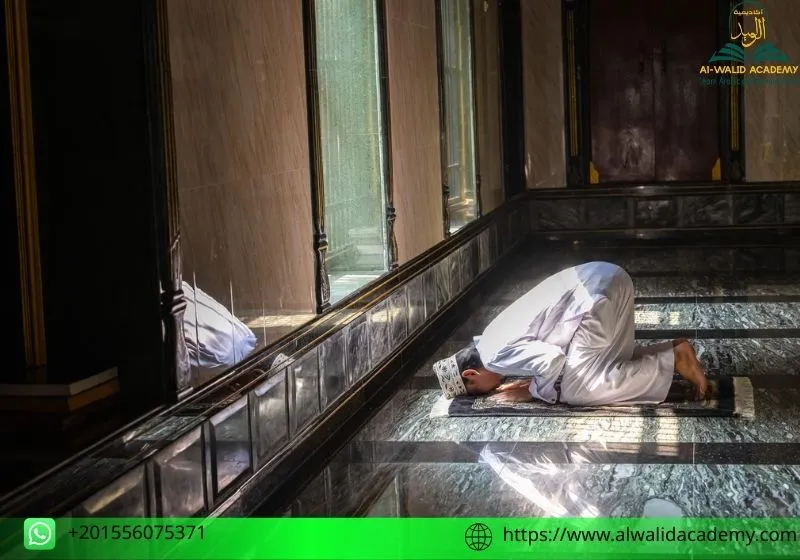
Salah, or daily prayers, is the second pillar of Islam. It serves as a daily spiritual link between the believer and Allah, repeated five times every day.
As the Prophet Muhammad (peace be upon him) said: “Prayer is the pillar of the religion.” Salah is not just physical movements; it is a dedicated time for bowing, prostration, and remembrance of Allah.
It cleanses the soul from sins, like being washed in a river five times a day, and it strengthens both your spiritual and daily life.
Why is Salah important in Islam
Salah is extremely important because it is the first act that a person will be held accountable for on the Day of Judgment. If your prayer is correct, your other deeds will also be correct; if your prayer is flawed, it affects the rest of your actions, just like a building collapsing if its pillar falls.
Prayer prevents immoral actions and wrongdoing, brings you closer to Allah, and strengthens your faith. It is also the last act of religion that can be interrupted—leaving it intentionally means leaving Islam practically.
Salah also brings balance to your daily life, dividing the day into spiritual segments and reminding you of Allah in every moment, keeping you organized and focused both spiritually and socially.
Studying Modern Standard Arabic strengthens comprehension of Islamic texts and structured learning.
How many times do Muslims pray each day?
Muslims perform five obligatory prayers every day:
- Fajr – two rak’ahs at dawn, starting the day with spiritual energy.
- Dhuhr – four rak’ahs after the sun passes its zenith, strengthening the spirit amid daily tasks.
- Asr – four rak’ahs before sunset, renewing spiritual energy before the day ends.
- Maghrib – three rak’ahs after sunset, helping the heart feel gratitude for the day.
- Isha – four rak’ahs before midnight, ending the day with remembrance and closeness to Allah.
Each prayer has a specific time that cannot be advanced or delayed, as Allah says: “Indeed, prayer has been decreed upon the believers at specified times.” Performing prayers at their earliest time earns the greatest reward.
The five daily prayers are not reduced even during travel, except when combining prayers according to the proper Islamic guidelines.
Read about: Forbidden times of Salah
Zakat: Obligatory Charity
Zakat is the third pillar of Islam, and it involves giving a portion of your surplus wealth to the poor and needy every year. Allah prescribed it in the Quran to purify and grow your wealth, making it blessed.
Zakat applies to gold, silver, cash, crops, and livestock once they reach the minimum threshold (nisab), and the required amount is usually 2.5% of savings. That’s why Zakat is not optional charity—it is a mandatory act of worship for every capable Muslim.
Meaning of Zakat
Zakat means purification and growth, just like “zaka” with crops means they grow and increase. In Islamic law, it is the right of specific recipients mentioned by Allah in Surah At-Tawbah: the poor, the needy, those working to collect and distribute it, freeing captives, reconciling hearts, and others.
For Zakat to become obligatory, the Muslim must be free, sane, and possess wealth above the nisab for a full lunar year. The wealth is transferred entirely to those entitled without expecting anything in return, which makes it different from gifts or taxes that have personal benefit.
Learn also about: Zakat As A Pillar Of Islam | full Guide
Role of Zakat in Social Justice
Zakat is more than just giving money; it is a tool to create balance, fairness, and solidarity in society. By fulfilling this obligation, Muslims help ensure everyone’s basic needs are met, promote economic stability, and develop a culture of compassion and gratitude.
- Zakat plays a vital role in achieving social justice because it redistributes wealth from the rich to those in need. Prophet Muhammad (peace be upon him) said: “It is taken from their rich and given to their poor.” This reduces the gap between social classes, prevents poverty and envy, and strengthens the unity of the community.
- Furthermore, Zakat nurtures the spirit of cooperation and empathy, protects society from crime by providing for the essentials of the poor, and encourages them to start small projects to improve their lives.
- It also increases blessings in the wealth of those who give it. In an Islamic state, proper collection and distribution of Zakat are essential to maintain economic balance and foster brotherhood among Muslims.
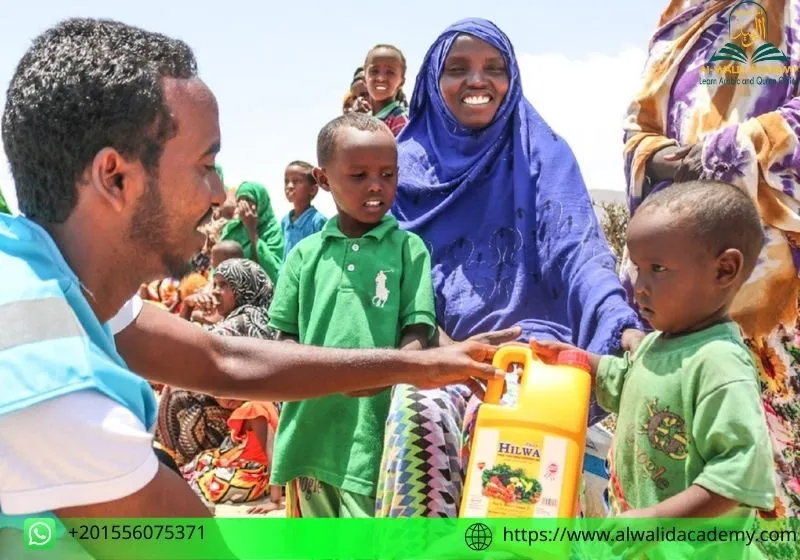
Sawm: Fasting During Ramadan
Fasting, known as Sawm, is the fourth pillar of Islam. It involves refraining from food, drink, and marital relations from dawn until sunset during the month of Ramadan.
Allah prescribed fasting for Muslims so they can develop Taqwa (God-consciousness) and humility, renew their faith, and appreciate the blessings they have.
Fasting is an annual act of worship that starts with the sighting of the new moon and ends with the celebration of Eid al-Fitr.
Purpose of Fasting in Islam
The main purpose of fasting is to:
- Help a person get closer to Allah and achieve Taqwa, as Allah says: “so that you may become righteous” (Al-Baqarah 2:183).
- Control your tongue, eyes, and hands, resisting desires, and avoiding sins.
- Teache patience, compassion for those in need, and strengthens your willpower against daily temptations.
Read about: Ramadan Fasting Rules
Spiritual Benefits of Sawm
Fasting offers many spiritual benefits:
- It purifies the heart from malice and envy, and increases sincerity and reliance on Allah.
- It reminds you that Allah is the ultimate Provider and creates a heightened spiritual state through Quran recitation, night prayers, and supplication.
- It disciplines the soul and cultivates noble character traits like patience and generosity.
- It opens the doors of mercy and forgiveness, protects the limbs from wrongdoing, and restores the heart’s spiritual health, as Ibn al-Qayyim said.
- Fasting draws you closer to Allah, renews your covenant with Him, and increases gratitude for blessings after experiencing hunger and thirst.
Who is exempt from fasting in Ramadan
Not everyone is required to fast; there are exemptions:
- The sick whose health could worsen by fasting.
- Travelers on long or difficult journeys.
- Pregnant or breastfeeding women are excused from fasting if there is fear of harm to themselves or their baby.
- Children, mentally ill people, or elderly who cannot fast.
- Women during menstruation or postpartum bleeding.
Anyone excused from fasting during Ramadan is required to fast the missed days later. However, if a person is permanently unable to fast—such as some elderly individuals—they must provide compensation (Kaffara) instead.
If circumstances are difficult, it is allowed to break the fast publicly, as Islam is merciful and does not burden anyone beyond their capacity.
Learn about: Verses About Ramadan in the Quran
Hajj: Pilgrimage to Mecca
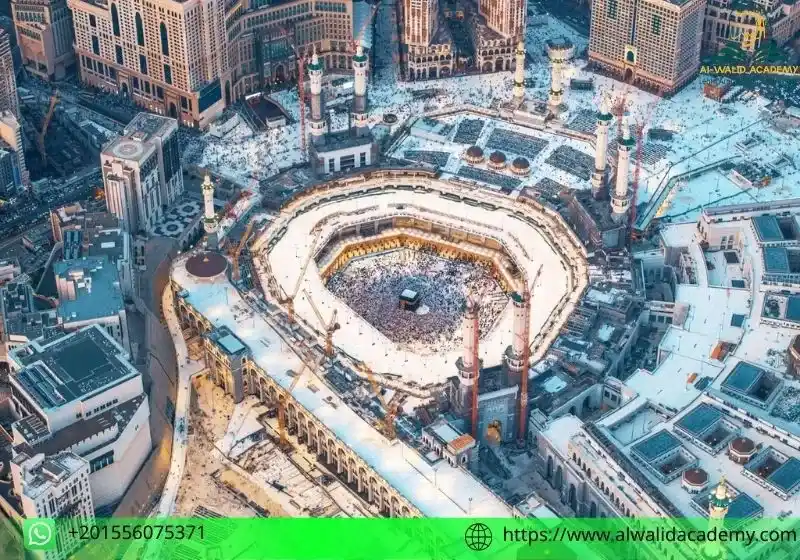
Hajj stands as the fifth and final pillar in the foundation of Islam. It is a major spiritual journey to Mecca during the days of Dhul-Hijjah, where millions of Muslims from all over the world gather to worship Allah through specific rituals such as Ihram, Tawaf (circumambulation of the Kaaba), and standing at Arafah.
Hajj is not just an ordinary trip; it is a life-changing experience. The Prophet Muhammad (peace be upon him) taught that a person who completes Hajj sincerely, avoiding sinful behavior and wrongdoing, returns free from sins—like a newborn child.
The acts of worship during Hajj purify the soul, erase sins, and bring a person closer to Allah.
Meaning of Hajj
Linguistically, Hajj means “to intend” or “to set out for something important.” Legally (in Islam), it is the journey to the Sacred House in Mecca to perform specific rituals during a prescribed time, including:
- Tawaf around the Kaaba.
- Sa’i (walking) between Safa and Marwah.
- Stoning the Jamarat.
- Animal sacrifice (Nahr).
- Standing at Arafah on the 9th of Dhul-Hijjah.
Hajj is a complete act of worship for the body, wealth, and heart. It represents monotheism and equality before Allah, as all pilgrims wear simple white garments (Ihram) without any distinction between rich and poor. It also reminds us of the story of Prophet Ibrahim (Abraham) and his son Isma’il (peace be upon them).
Who Is Required to Perform Hajj
Hajj is obligatory for every Muslim who is adult, sane, free, and capable at least once in their lifetime. The conditions are:
- Must be a Muslim.
- Physically able to travel, walk, and perform all the rituals.
- Financially able to afford the journey and accommodations and return safely without causing harm to themselves, their family, or debts.
As Allah says: “And Hajj to the House is a duty that mankind owes to Allah—those who can afford the journey” (Al-Imran 3:97).
- Women need a mahram (male guardian) or a trustworthy group, depending on some schools of thought.
- Seriously ill or those unable to complete the journey safely are exempt.
- Children and mentally incapable people are also exempt.
Anyone who is able to perform Hajj but does not do it bears a major sin. Hajj is a gateway to Paradise for those who are capable, purifies the heart, and strengthens the spirit.
Read about: Dua for Intention of Umrah
The Five Pillars as a Complete Way of Life
The Five Pillars of Islam are not just separate acts of worship—they form a complete lifestyle that shapes a Muslim’s entire life, from faith to daily actions and interactions.
These pillars connect the heart, body, wealth, and soul together: the Shahada nourishes the heart, Salah and Sawm strengthen the body and spirit, Zakat organizes wealth, and Hajj purifies the soul.
Together, they help a Muslim live a balanced life in both this world and the Hereafter.
How the Five Pillars Strengthen Faith
Each pillar complements the others and strengthens a Muslim’s faith:
- Shahada reinforces monotheism and belief in the Prophet’s message.
- Salah renews your connection to Allah five times a day with full devotion.
- Zakat strengthens the spirit of good deeds and giving, cultivating responsibility toward the needy.
- Sawm teaches patience and self-control, helping manage desires.
- Hajj completes the spiritual journey, erases sins, and renews the covenant with Allah.
Like daily exercise for the heart, the pillars strengthen faith and protect spiritual vitality. According to the Prophet Muhammad (peace be upon him), the structure of Islam is established upon five fundamental pillars.
These pillars maintain the strength of religion like a solid foundation, while also bringing blessings into a person’s life by keeping them constantly connected to Allah.
Connection Between Worship and Daily Life
The Five Pillars don’t just stay in worship—they influence every part of daily life:
- Salah structures your day and provides five periods for reflection and connection with Allah.
- Zakat organizes your finances and reminds you of the less fortunate whenever you spend.
- Sawm teaches empathy for the needy, and its effects continue throughout the year.
- Hajj unites the Muslim community in Mecca and teaches humility, patience, and discipline.
- Shahada transforms all intentions and actions into acts of worship when done sincerely for Allah.
In short, the Five Pillars create a complete lifestyle, making daily life a path toward the Hereafter, integrating spirituality with practical living without separating the two.
Common Questions About the Five Pillars of Islam
The Five Pillars are the foundation of Islam, and many Muslims have questions about them to better understand their duties and the wisdom behind their selection.
The Prophet Muhammad (peace be upon him) said: “Islam is built on five [pillars],” showing that these pillars are the essential supports of the religion.
Are the Five Pillars Required for All Muslims?
The Five Pillars are obligatory for every adult, sane, and free Muslim, but not every pillar applies under the same conditions:
- Shahada is the first step anyone must take to enter Islam.
- Salah and Zakat are required for all Muslims who are capable of performing them.
- Sawm (fasting) is mandatory for every Muslim except those with valid exemptions, such as the sick or travelers.
- Hajj is required once in a lifetime only for those who are physically and financially able to perform it.
Those unable to perform these obligations, like children, the mentally ill, or the poor, are not held accountable, but when they grow up and become capable, they must fulfill their duties. Islam is merciful and does not burden anyone beyond their capacity.
Why Were These Five Acts Chosen Specifically?
The Five Pillars were carefully chosen to cover all aspects of a Muslim’s life:
- Shahada strengthens the heart and reinforces faith.
- Salah organizes the day and connects the body with the soul.
- Zakat makes wealth a tool for giving and social solidarity.
- Sawm teaches patience, self-discipline, and control over desires.
- Hajj is a major spiritual experience that strengthens unity and belonging among Muslims.
As mentioned in the Hadith of Gabriel, these pillars are complete and integrated to build a balanced individual and a cohesive society.
There is no addition or omission; it is divine wisdom that combines spirituality with practical life, making Islam a complete and comprehensive way of life.
Learning the Five Pillars Through Islamic Studies
Islamic studies are the best way to deeply understand the Five Pillars. Books, lessons, and educational videos explain each pillar in detail with examples from the Quran and Sunnah.
This approach helps Muslims turn knowledge into daily practice. It’s suitable for both children and adults, in schools or online learning, ensuring Islam stays alive in everyday life—not just theoretical knowledge.
Understanding Islam Through Structured Learning
Structured learning usually starts with Shahada as the foundation of faith, followed by Salah and Zakat as daily acts of worship, and then Sawm and Hajj as seasonal spiritual practices. It can include practical activities like pillar drawings for kids or easy-to-memorize songs.
This method connects theory with practice, similar to elementary lessons that teach “Islam is built on five [pillars]” while also showing practical applications. It builds strong faith and helps students understand the wisdom behind each pillar in shaping both personal character and society.
Build a Strong Islamic Foundation with Al-Walid Islamic Academy
Understanding the Five Pillars of Islam is the first step toward building a confident and practicing Muslim identity.
At Alwalid Islamic Academy, students don’t just memorize information — they gain deep understanding and learn how to apply each pillar in real life.
The academy transforms the study of Shahada, Salah, Zakat, Sawm, and Hajj into a meaningful journey. Every lesson is designed to help students connect faith with daily actions, so Islam becomes a lived experience rather than theoretical knowledge.
Why Families Trust Alwalid Islamic Academy
- Step-by-Step Learning Path: A carefully designed curriculum that begins with core beliefs and gradually moves toward practical worship and spiritual development.
- Expert Islamic Educators: Qualified teachers who simplify complex concepts and provide authentic guidance rooted in Quran and Sunnah.
- Engaging Online Environment: Interactive classes, visual tools, and age-appropriate activities that make learning effective and enjoyable.
- Flexible Programs: Accessible online classes tailored for children, teens, and adults worldwide.
- Focus on Character & Values: Beyond teaching rulings, the academy emphasizes discipline, gratitude, patience, empathy, and community responsibility — all reflected in the Five Pillars.
With a balanced approach that combines knowledge, practice, and character development, students grow spiritually while gaining confidence in their Islamic identity.
Join Alwalid Islamic Academy today and start building knowledge, character, and faith — one pillar at a time.
Learn Quran, Arabic, and Islamic Studies with certified teachers in fun, interactive, and personalized sessions. Join thousands of students around the world and begin your path today!
Conclusion
The Five Pillars are more than just obligations; they are complete life lessons that shape a Muslim from inside out, connecting the spirit with the body and balancing worldly life with the hereafter.
- Shahada: teaches monotheism and obedience to Allah and His Messenger.
- Salah: instills discipline and mindfulness throughout daily life.
- Zakat: cultivates generosity, gratitude, and social solidarity.
- Sawm: teaches patience, self-control, and empathy.
- Hajj: provides a profound spiritual experience that unites the Muslim community and purifies the soul.
By practicing these pillars, a Muslim lives a balanced life, constantly grateful to Allah and supportive of others.
They guide one towards true happiness and peace, as the Prophet Muhammad (peace be upon him) emphasized, turning everyday life into continuous worship filled with blessings and security.
Practical Takeaways for Muslims
The Five Pillars serve as a roadmap for applying Islamic principles in daily life:
- They transform routine actions into acts of worship.
- They strengthen personal character and moral values.
- They foster empathy, unity, and a sense of responsibility toward society.
- They remind Muslims to stay spiritually connected while managing worldly responsibilities.
Following the Five Pillars consistently ensures that faith is not just a belief but a living, practical way of life.
FAQS
Are the Five Pillars required for all Muslims?
They are required for every adult, sane Muslim, with some exceptions based on ability and circumstances.
Can someone be Muslim without practicing all five pillars?
Belief makes a person Muslim, but practicing the Five Pillars completes and strengthens faith.
Where are the Five Pillars mentioned?
The Five Pillars are based on authentic hadith and supported by Quranic teachings.
Who must pay Zakat?
Zakat is required for Muslims who meet the minimum wealth threshold (nisab).