

Mastering proper recitation starts with understanding Sifaat al-Huroof and how each characteristic affects the sound of every letter. These qualities are the foundation of accurate pronunciation and help prevent common mistakes without confusion. Learning Sifaat al-Huroof in a simple way allows you to notice real improvement in your recitation from the very first practice.
What Are Sifaat al-Huroof?
Sifaat al-Huroof refers to the foundation of correct Arabic letter pronunciation during Quranic recitation.
They are not merely theoretical concepts; rather, they are phonetic rules that determine how each letter sounds when it is articulated—whether the sound is strong or soft, breathy or firm.
In Tajweed, these characteristics explain how a letter should be pronounced from its correct articulation point without being altered or confused with another similar letter.
That is why anyone learning to recite the Quran must understand Sifaat al-Huroof—not just memorize them, but apply them practically while reading.
Simply put, Sifaat al-Huroof give every Arabic letter its own distinct sound identity, setting it apart from all other letters.
Explore Quran courses online designed to teach every letter’s Sifaat, helping your recitation stay pure and precise.
Definition and Purpose of Letter Characteristics
Huroof refers to the Arabic letters, the 28 characters that form the foundation of the Quranic text.
The main purpose of Sifaat al-Huroof is to help the reciter:
- Pronounce each letter from its correct articulation point.
- Control breath and vocal strength.
- Prevent confusion between letters with similar articulation points.
This is essential because Arabic letters are not pronounced in the same way.
Some letters are whispered, others are voiced; some are strong, while others are soft—and these differences directly affect the accuracy of recitation.
Why Sifaat al-Huroof Are Important in Tajweed

Sifaat al-Huroof form the core of Tajweed. Without them, recitation becomes weak and filled with errors, even if the reciter knows the articulation points well.
Their Effect on Pronunciation and Meaning
Sifaat al-Huroof define the unique identity of each Arabic letter in pronunciation. Without applying them correctly, recitation becomes incomplete, even if the articulation points are accurate.
These characteristics control the strength, clarity, and flow of the sound, which directly affects the quality of recitation.
1. Accurate Pronunciation and Avoiding Mistakes
Sifaat al-Huroof ensure stable and clear pronunciation, preventing one letter from sounding like another—especially letters with close articulation points.
2. Preserving the Quranic Meaning
In the Quran, changing just one characteristic of a letter can completely alter the meaning.
For example:
- Haa (هـ) is a whispered letter.
- Haa (ح) is a voiced letter.
Confusing them changes the word and its meaning.
Another example:
The letter Qaaf (ق) is a heavy, elevated letter. If it is lightened and pronounced like Kaaf (ك), both pronunciation and meaning are affected.
3. Beauty and Impact of Recitation
Tajweed is not only about correctness—it is about presence and humility. Proper application of Sifaat al-Huroof makes the recitation:
- Balanced in sound.
- Clear in articulation.
- Closer to the recitation of skilled Quranic reciters.
4. The Foundation of All Tajweed Rules
Rules such as Idghaam, Izhaar, and Iqlaab are all built upon Sifaat al-Huroof.
If the foundation is weak, mastering the rest of Tajweed becomes difficult.
Master every letter’s sound with our Quran Memorization Course and perfect your recitation with Sifaat al-Huroof.
Categories of Sifaat al-Huroof
In Tajweed, the characteristics of Arabic letters are organized in a precise and purposeful system. They are not random rules, but carefully classified qualities that help reciters pronounce each letter correctly and avoid confusion between similar sounds.
This classification makes applying Tajweed much easier, as it allows learners to recognize each letter’s nature quickly—whether it is heavy or light, whispered or voiced.
In general, scholars divided Sifaat al-Huroof based on one main idea:
- Characteristics with opposites.
- Characteristics without opposites.
This is the well-established classification adopted by leading Tajweed scholars, including Imam Ibn Al-Jazari.
Quran lessons for Kids online help children recognize and pronounce letters with proper Sifaat from the start.
Learn Quran, Arabic, and Islamic Studies with certified teachers in fun, interactive, and personalized sessions. Join thousands of students around the world and begin your path today!
Main Classification of Letter Characteristics
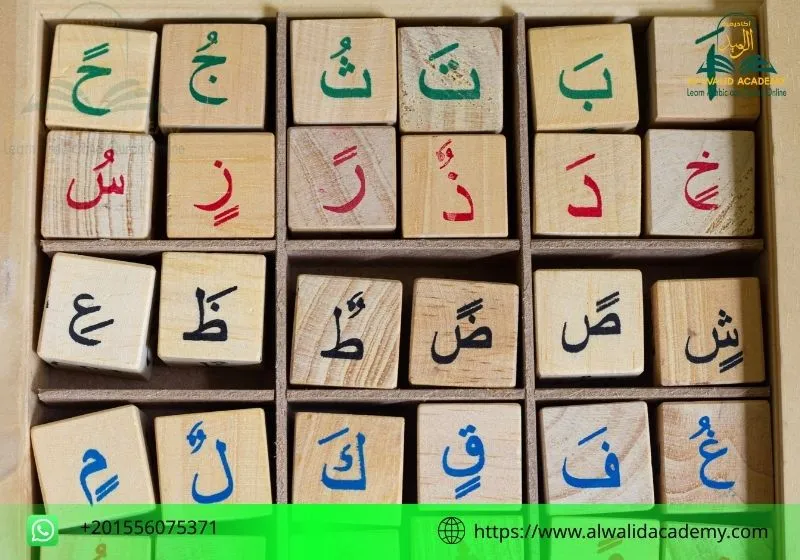
There are 17 recognized characteristics of Arabic letters in Tajweed:
- 10 characteristics with opposites (five paired sets).
- 7 characteristics without opposites.
Each Arabic letter carries:
- Five characteristics from the opposite pairs.
- Plus any applicable non-opposite characteristics.
This structure helps reciters identify letter qualities easily, especially for letters with similar articulation points, such as ḥa’ and ghayn.
Sifaat with Opposites
These characteristics exist in pairs, and every letter must take one characteristic from each pair—not both.
1. Al-Hams and Al-Jahr
- Al-Hams (Whispering): Air flows freely, producing a soft sound
Letters: ف، ح، ث، هـ، س، ك، ت، ص، ش. - Al-Jahr (Voicing): Airflow is blocked, creating a strong sound
All remaining letters.
Example: The letter ba’ in “Bismillah” must be voiced; whispering it would be incorrect.
2. Ash-Shidda, Ar-Rikhawah, and Al-Bayniyyah
- Ash-Shidda: The sound stops abruptly (e.g., ق، ط).
- Ar-Rikhawah: The sound flows smoothly (e.g., س، هـ).
- Al-Bayniyyah: A middle state between the two (e.g., م، ل).
Take a Tajweed Course to understand the differences between Hams, Jahr, Shiddah, and Rikhwah in practice.
3. Al-Isti‘laa and Al-Istifaal
- Al-Isti‘laa: The tongue rises, producing a heavy sound
Letters: خ، ص، ض، غ، ط، ق، ظ. - Al-Istifaal: Light pronunciation, All other letters.
4. Al-Itbaaq and Al-Infitah
- Al-Itbaaq: The tongue presses against the upper palate
Letters: ص، ض، ط، ظ. - Al-Infitah: The sound remains open.
5. Al-Ismaat and Al-Idhlaaq
- Al-Ismaat: Relative heaviness in pronunciation.
- Al-Idhlaaq: Smooth and light articulation.
Sifaat without Opposites
These are independent characteristics with no opposing qualities. There are seven core attributes, with some scholars also including ghunnah and leen.
Key examples include:
- Al-Qalqalah: A bouncing echo sound with sukoon.
- As-Safeer: A sharp whistling sound.
- Al-Inhiraaf: Deviation of airflow.
- At-Tafashshi: Sound spreading (notably in shin),
- Al-Istitaalah: Slight elongation of sound.
- At-Takreer: Controlled vibration of the tongue (specific to ra’).
- Ghunnah and Leen (according to some scholars).
Quran Classes for Ladies provide interactive lessons on proper pronunciation and Sifaat application in a supportive environment.
Sifaat with Opposites
Sifaat with opposites are among the most important rules in Tajweed. They help learners pronounce each Arabic letter accurately and clearly, just like skilled Quran reciters.
These characteristics explain how air flows, how strong the sound is, and how the tongue moves during pronunciation, which prevents mixing up similar letters.
Hams and Jahr
This pair explains how air behaves when pronouncing a letter. Understanding it helps control breath and sound clarity during recitation.
| Sifah | Explanation | Letters | Example |
| Hams | Air flows freely while pronouncing the letter, producing a soft and light sound | Found in “Fahatha Shakhsun Sakat” (ف ح ث ش س ك ت ص) | The kaf in كِتَابْ “Kitab” when pronounced softly |
| Jahr | Air is blocked and does not flow, making the sound stronger and more solid | All letters not included in Hams | The ba in بِسْمِ اللَّهِ“Bismillah” |
Mastering Hams and Jahr adds balance to recitation: softness where needed and strength where required.
Start Learning Arabic for Beginners alongside Sifaat al-Huroof to improve pronunciation and fluency.
Shiddah, Rikhwah, and Bayniyyah
These sifaat describe how strongly the sound is held or released from its articulation point.
| Sifah | Explanation | Letters | Example |
| Shiddah | Sound is completely blocked, creating a firm and sharp pronunciation | “Ajid Qutb Kat” (أ ج د ق ط ب ك ت) | The qaf with strong pressure as in “Inshakat”, انشَقَّت |
| Rikhwah | Sound flows smoothly without full blockage | Remaining letters | The gentle sound of word “yoghneekom”, يُغْنِيكُم |
| Bayniyyah | A middle state between strength and softness | ل م ن (according to many scholars) | The balanced sound of “noor”, نُور |
This classification helps avoid over-pronouncing or weakening letters.
Learn more about: Best Place to Learn Arabic Online
Isti‘laa and Istifaal
These sifaat relate to the position of the tongue and how heavy or light the sound feels.
| Sifah | Explanation | Letters | Example |
| Isti‘laa | The tongue rises toward the upper palate, producing a heavy sound | “Khuss Daghṭ Qiz” (خ ص ض غ ط ق ظ) | Ḍad in “Ad-Ḍallin”, الضَّالِّين |
| Istifaal | The tongue stays low, creating a lighter sound | All remaining letters | The smooth seen sound in “sabil”, سَبِيل |
These characteristics directly affect tafkheem (heaviness) and tarqeeq (lightness).
Itbaaq and Infitah
This pair explains whether the tongue sticks closely to the palate or remains open.
| Sifah | Explanation | Letters | Example |
| Itbaaq | Tongue presses firmly against the upper palate, narrowing the sound | ص ض ط ظ | The heavy taʼ in “Ṭahir”, طَاهِر |
| Infitah | Tongue stays open without pressure | All other letters | Open sound of ba in “Bashar” , بَشَر |
Itbaaq strengthens heavy letters and separates them clearly from lighter ones.
Idhlaaq and Ismaat
These sifaat describe how easily the letter flows from the tongue and lips.
| Sifah | Explanation | Letters | Example |
| Idhlaaq | Sound flows smoothly and quickly | Most letters | Fast, light pronunciation |
| Ismaat | Slight resistance in the articulation | ر ل ن م | The rolling ra sound |
Idhlaaq feels smooth like flowing water, while Ismaat adds control and precision.
Sifaat without Opposites Explained

In Tajweed, some letter characteristics have no opposing qualities. This means a letter either carries the trait or it does not—there is no contrasting attribute.
These seven characteristics play a vital role in giving each Arabic letter a distinct sound identity, even when letters share similar articulation points.
Their importance becomes especially clear with silent letters, as they keep the recitation alive, balanced, and naturally rhythmic, reflecting the style of skilled Quran reciters.
Learn more about: Best Online Course To Learn Arabic
-
Qalqalah
Qalqalah is a sudden vibration that occurs within the articulation point, creating a slight “bounce” in the sound without forming a full vowel. Its five letters are grouped in the phrase Qutb Jad: ق، ط، ب، ج، د.
This quality is most noticeable when the letter is silent, such as the qaf in Al-Haqq “الْحَقِّ” or the dal in Aḥad “أَحَدْ”.
Proper balance is essential—weak qalqalah sounds dull, while exaggeration turns it into an incorrect vowel sound.
-
Leen
Leen refers to softness and ease in pronunciation without strain.
It occurs in the silent waw and ya’ preceded by a fathah, as in Quraysh “قُرَيْش” and Al-Bayt “ الْبَيْت “.
This characteristic appears mainly during stopping (waqf), adding a gentle extension that enhances the smoothness and beauty of recitation.
-
Inhiraf
Inhiraf is a slight deviation of airflow during articulation without changing the letter’s original point of exit. It applies to the ra’ and lam, such as the ra’ in Ar-Rahman “الرَّحْمَن”.
This subtle tilt ensures natural pronunciation and prevents stiffness, especially in the sound of the ra’.
-
Takrir
Takrir is unique to the letter ra’ and involves a light vibration at the tip of the tongue. The goal of learning this trait is to control it, not to exaggerate it.
A balanced takrir keeps the ra’ smooth and distinct without unnecessary shaking.
-
Safir
Safir is a sharp, whistling sound produced between the teeth and the tongue tip. It applies to sin sabaa “سَبْعَ”, sad like salah “صَلَاة”, and zay, with sad being the strongest due to its heaviness.
This quality enhances clarity and sharpness, giving these letters their recognizable sound.
-
Tafashshi
Tafashshi is the spreading of sound throughout the mouth rather than along a narrow path. It is exclusive to the letter shin, as in Shahr “شَهْر”.
This spread creates a rich, full sound that clearly distinguishes shin from sin.
-
Istitalah
Istitalah refers to the lengthwise extension of sound along the sides of the tongue. It is exclusive to the letter dad, evident in words like Dallin “ضَالِّينَ”.
This extension preserves the strength and stability of dad, making it one of the most distinctive sounds in Quranic recitation.
Common Mistakes in Applying Sifaat al-Huroof
Common mistakes in applying Sifaat al-Huroof have a noticeable impact on the beauty of Quranic recitation, and in some cases, they may even alter the meaning.
These mistakes are especially common among beginners and usually result from confusing similar-sounding letters or neglecting precise characteristics such as heaviness and lightness.
Read about: Tajweed Mistakes
Mixing Similar Sounds
One of the most common errors is confusing letters that have close articulation points, such as tha (ث) and ta (ت), or daad (ض) and dhaa (ظ).
A well-known example is pronouncing “wad-duha”وَالضُّحَى as “waz-zuha” وَالظُّحَى, which happens when isti‘laa and itbaaq are not applied correctly.
Similarly, the letter taa (ط) may sound like taa (ت) if itbaaq is not properly observed, and saad (ص) may shift toward seen (س) when it is lightened instead of being pronounced with heaviness.
These mistakes remove the distinctiveness of the sound and make the recitation lose its Quranic strength.
The most effective solution is slow and focused practice. Repeating words such as “tariq” طَرِيق and “tariq” تَرِيق carefully while lifting the tongue toward the upper palate during heavy letters helps clearly distinguish the sounds.
Ignoring Heavy and Light Letters
A major mistake is lighting heavy letters, especially the letters of
(khus daght qiz), (خص ضغط قظ). A clear example is pronouncing the letter qaaf (ق) lightly in the word “Qur’an” قُرْآن, even though the dammah before it requires proper heaviness.
On the other hand, exaggerating the heaviness of light letters such as seen (س) or a non-heavy raa (ر) makes the recitation sound overly heavy and less smooth.
To solve it, apply the well-known rule: “The alif follows the letter before it.” Practice the contrast between “Rabb”, رَبِّ (light) and “Qur’an”, قُرْآن (heavy), and observe the difference in mouth position and sound. With consistent practice, the distinction becomes natural.
Simple Tips to Learn and Apply Sifaat Correctly
Sifaat al-Huroof (letter characteristics) are not just theoretical rules; they are practical skills that make your recitation precise and beautiful, like that of the renowned reciters. Correct application ensures a clear, balanced voice.
The key elements are focused listening, deliberate repetition, and immediate correction from a qualified teacher. Learning alone may cement mistakes, but guided practice accelerates improvement.
-
Listening and Repetition
Start by listening to famous reciters like Al-Minshawi and Al-Husary, focusing on one characteristic per session. For example, dedicate a day to practicing Isti‘laa, choose a short surah like Al-Qamar, and repeat the heavy letters 30–50 times aloud, paying attention to tongue placement and airflow.
Record your voice and compare it to the original recitation, you will notice mistakes such as over-softening a Qaf or weak Qalqalah, which you can correct until your pronunciation matches the original.
Use Tajweed apps to hear practical examples of common mistakes and corrections; this is more effective than theoretical practice alone.
-
Practicing with a Qualified Teacher
Regardless of repetition, practicing with an experienced Tajweed teacher is essential. The teacher corrects your articulation and letter characteristics in real time, for instance, proper pronunciation of Daad or differentiating between whispering (Hams) and voicing (Jahr).
Teachers also provide personalized exercises, such as Qalqalah drills on Qutb Jadd letters or practicing Tafkheem (heavy letters) and Tarqiq (light letters). Such precision is difficult to achieve alone.
Joining an organized Tajweed academy, like Al-Walid Quran Academy, allows you to practice all letter characteristics systematically with continuous supervision from qualified teachers, ensuring rapid and clear improvement.
Learn Quran, Arabic, and Islamic Studies with certified teachers in fun, interactive, and personalized sessions. Join thousands of students around the world and begin your path today!
Summary
There are 17 key Sifaat:
- 10 with opposites: Hams/Jahr – Shiddah/Rikhwah/Bayniyyah – Isti‘laa/Istifaal – Itbaaq/Infitah – Idhlaaq/Ismaat.
- 7 without opposites: Qalqalah – Leen – Inhiraf – Takrir – Safir – Tafashshi – Istitalah.
Mastering Sifaat prevents mixing similar letters like Kha/Sa/Da/Ta/Qaf/Za, and ensures correct Tafkheem and Tarqiq based on context.
Golden rule: correct articulation + full application of characteristics = pure and impactful recitation.
Start with listening and focused practice, combine with a qualified teacher—especially in a professional environment like Al-Walid Academy—and your recitation will soon resemble the masters.
Learn Sifaat al-Huroof Practically with Al-Waleed Academy
If you want to perfect your pronunciation and apply Sifaat al-Huroof correctly like the expert reciters, Al-Walid Academy provides all the practical tools and guidance you need.
Here, you won’t just learn the theory—you’ll practice every letter characteristic with hands-on support from qualified teachers.
What You’ll Gain:
- Practical exercises covering all 17 letter characteristics, from Hams and Jahr to Qalqalah and Isti‘laa.
- Immediate correction of your letter articulation while reciting.
- Mastery of Tafkheem (heaviness) and Tarqiq (lightness) and clear distinction between similar letters.
- Flexible learning options: online or in-person classes.
- Real audio examples from famous Quran reciters for effective practice.
- Continuous feedback to track your progress and improve pronunciation consistently.
Enroll now at Al-Walid Academy for Quran and Tajweed and feel the difference from your very first lesson in letter articulation and recitation.
Conclusion
Sifaat al-Huroof are not just theoretical rules—they are the backbone of correct and expressive Quranic recitation.
By mastering Hams and Jahr, Shiddah and Rikhwah, Isti‘laa and Istifaal, Itbaaq and Infitah, along with special traits like Qalqalah, Leen, and Inhiraf, you can easily distinguish letters and maintain the purity of your recitation.
Daily practice, repeated listening to renowned reciters, and guidance from a qualified teacher will help you apply each rule accurately.
Focusing on the correct articulation while mastering the letter traits will make your recitation pure, smooth, and spiritually impactful.
FAQs
How do Sifaat al-Huroof affect memorization of the Quran?
The letter characteristics make each letter pronounced correctly, which helps you memorize words exactly as they are without mixing them up or changing the meaning.
Can Sifaat al-Huroof improve your Quranic voice?
Yes! When you apply the Sifaat correctly, your voice becomes clear, balanced, and can sound like experienced reciters.
Is it okay to learn Sifaat al-Huroof online?
Absolutely, but it’s important to choose a trusted platform or teacher who can show you the articulation points and correct mistakes immediately.
How do I know if I am pronouncing letters correctly?
Record your voice and compare it with a well-known recitation. If your sound is balanced and the letters are distinct, your pronunciation is correct.
Are some letters harder to pronounce than others?
Yes, heavy letters like Qaf (ق) and Dad (ض) need more focus, especially for beginners, because their articulation is different from other letters.
Can practicing with tongue positions help?
Definitely! Knowing the exact position of the tongue, lips, and palate ensures letters come out correctly from the first try and speeds up learning.
Does stress affect Sifaat al-Huroof?
Yes, if you focus on the Shiddah (strength) or Rikhwah (softness) of letters correctly, your voice will be more balanced and expressive during recitation.
Can Sifaat al-Huroof prevent common mistakes?
Absolutely. Knowing each attribute and when to use it helps you avoid mixing letters or unintentionally changing meanings, which is crucial in Tajweed.
How to apply Sifaat al-Huroof in long verses?
Break the verse into smaller parts, focus on each letter and its sound, then repeat the entire verse in a natural, balanced flow.
Are there tips for practicing Sifaat with siblings or friends?
Yes! You can challenge each other: one recites a letter and the other corrects it. This makes learning fun and more effective.