As the saying goes, education in childhood is like an inscription on stone: it is not easily erased, but rather becomes part of one’s character and way of thinking. This is clearly evident in Islamic Education at a Young Age. It has a significant impact on children’s understanding of religion, worship, and closeness to Allah, and is considered of the utmost importance for Muslims in general, and for those living in foreign environments in particular. This helps to preserve the distinctive Islamic character.
What Is Islamic Education for Children?
Islamic Education at a Young Age is an educational journey aimed at instilling Islamic values and principles in children from an early age. The aim is to help them develop a well-balanced character based on the noble moral values inherent in our Islamic faith.
This education encompasses several foundations and aspects, including:
- Teaching children the fundamentals of correct Islamic belief, the Oneness of God and His worship.
- The Five Pillars of Islam and a simple explanation of each,
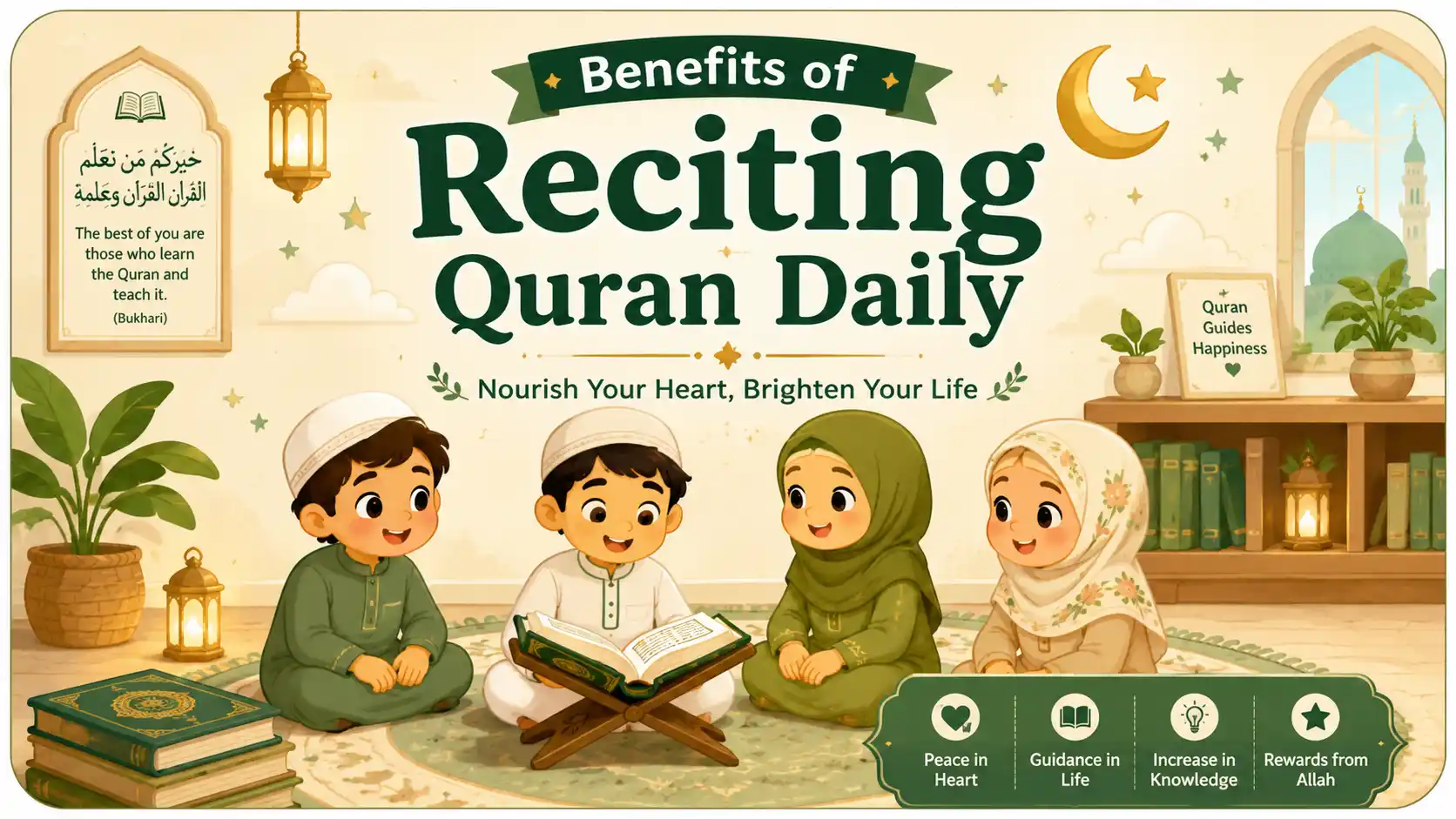
- The Holy Qur’an and the memorisation of short surahs, accompanied by a simplified explanation of their meanings.
- The Sunnah of the Prophet and stories about the prophets and the righteous.
- Islamic ethics, such as honesty, trustworthiness, humility, compassion and respect for others.
Islamic Education at a Young Age is not limited to theoretical education alone, but extends to practical application in their daily lives. The aim is to raise a generation that is conscious of its religion and capable of remaining steadfast in all circumstances and environments.
- Islamic Studies Course at Al-Walid Academy An important step towards learning about our Islamic heritage.
Benefits of Islamic Education at a Young Age
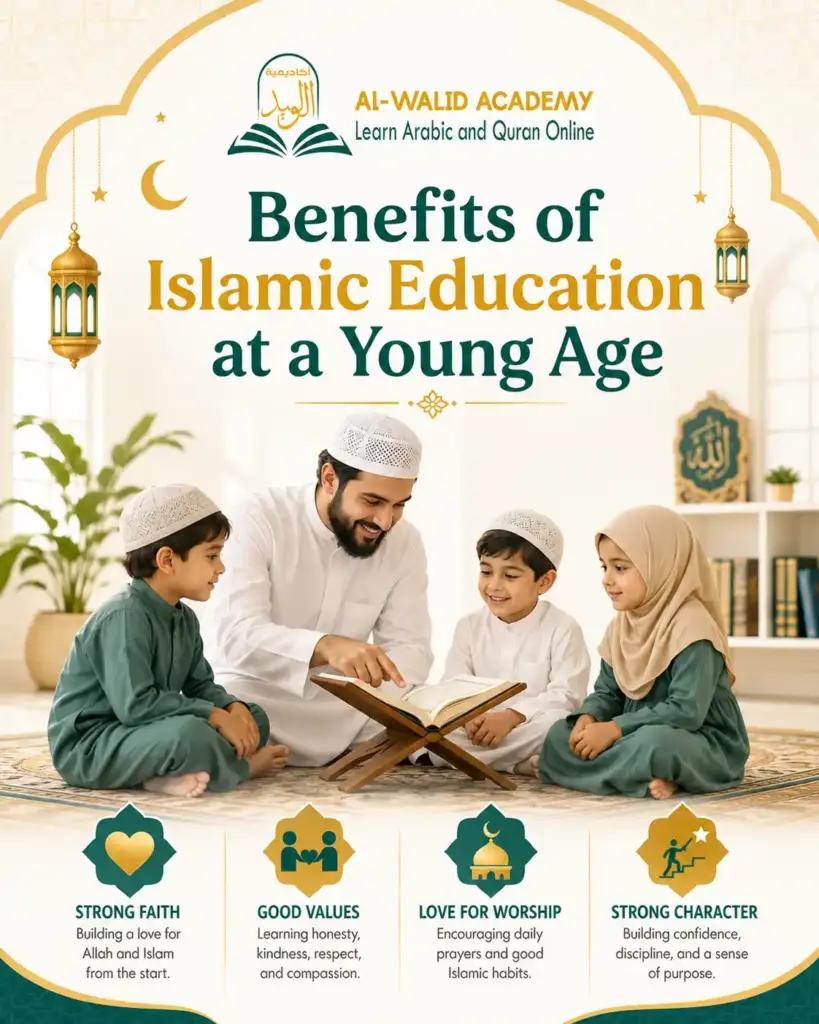
Education from a young age is a wonderful start, and when it comes to religious studies, it becomes even more important
Building a Strong Connection with Allah
One of the greatest benefits of introducing children to the Islamic faith at an early age is building a strong relationship with Allah. This is achieved by fostering a sense that Allah is the One who protects and watches over them, and that He is close to them.
This is done by teaching them some of the surahs of the Qur’an, supplications, and simple acts of worship.
Strengthening Muslim Identity
Islamic Education at a Young Age Promotes Islamic identity and pride in our religious rituals and our diversity as Muslims, whether in terms of appearance, dress codes, food and drink, or festivals and the ways in which we celebrate them.
Teaching Good Manners and Islamic Values
Islam is a religion of good morals; as the Prophet, peace be upon him, said: ‘The one among you who is closest to me in seat on the Day of Resurrection is the one with the best character.’Among these virtues are:
- Honesty, as muslims never lie.
- Humility, as Muslims are humble before God Almighty.
- Compassion and kindness towards those in need.
- Respect and appreciation for those who are older.
- Patience and contentment with whatever God decrees for us in this world.
Helping Children Understand Right and Wrong
Islamic Education at a Young Age about what is lawful and unlawful, the reckoning on the Day of Judgement, Paradise and Hell – all of this helps to raise a child who is devout and disciplined; and when they grow up, they will be more aware and keen to adhere to their faith, even if the supportive religious environment weakens.
Creating a Lifelong Love for the Quran
Teaching children a Quran Memorization Course at an early age helps to develop their fluency in Arabic, as well as their memorisation and listening skills. It also makes the Holy Qur’an an integral part of their lives and a daily duty that they never fail to fulfil.
What Should Children Learn First in Islamic Education?
The first step – and deciding what to teach children – is of the utmost importance in ensuring they understand the material and encouraging them to continue.
Basic Belief in Allah
Children must be taught about God, may He be glorified and exalted, His ever-present presence amongst us, His absolute power, and that there is no god but Him in this universe.
They must also be taught about some of God’s attributes, such as ‘Al-Rahman’ (the Most Merciful), and the meaning of compassion should be explained to them by helping them to be mindful of those around them and to show kindness to all creatures.
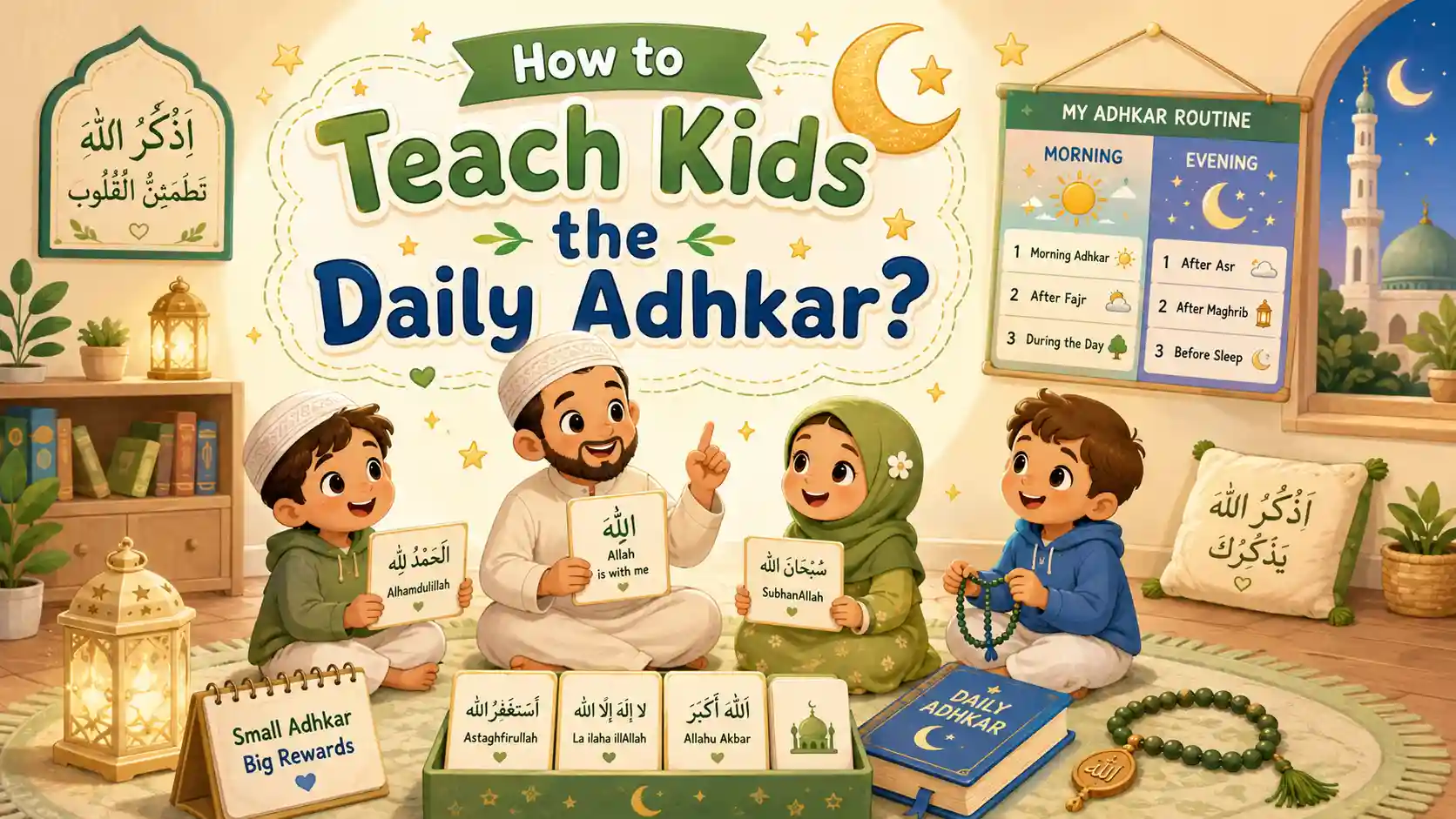
Short Duas and Daily Adhkar
Supplication is an obligation upon every Muslim; indeed, Allah, the Most High, becomes angry with the servant who does not supplicate. Accustoming children from a young age to turn to Allah, the Most High, in all situations, like Dua to Memorize Quran, strengthens their relationship with Him.
Furthermore, remembrance of Allah is essential for maintaining constant connection with Him and protecting them from all forms of evil and envy.
Simple Quran Surahs
The Holy Qur’an is the foundation of religious knowledge and guidance; therefore, it must form part of children’s lives. This is achieved through:
- Regular recitation of verses from the Holy Qur’an with proper tajweed.
- Helping them to memorise short surahs and verses accompanied by simple explanations like Surah Al-Falaq explained.
- Encouraging them to embody these noble qualities and moral values.
Salah Basics for Children
From an early age, children should be made aware of the names of the prayers, their times and the number of rak’ahs in each prayer, whilst gradually learning how to perform them in a manner appropriate to their age, starting with imitating the movements and progressing to performing the prayers correctly.
Stories of the Prophets
Sharing stories about the prophets is extremely important, like Seerah, because from a young age children are captivated by tales of strength and heroism, and indeed look up to them as role models. When these role models are real people who went through real-life trials and endured much suffering in order to uphold the word of God, a love for this religion is instilled in children, along with a sense of awe at following in their footsteps.
How to Teach Islamic Education to Young Children
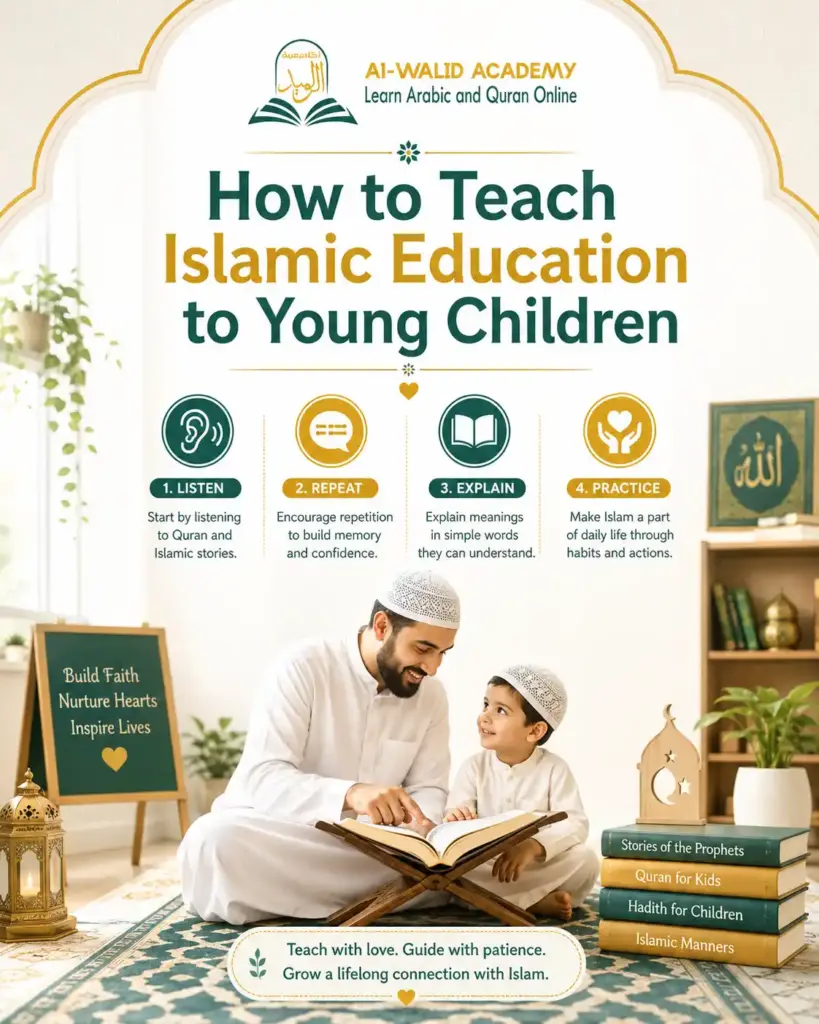
Teaching children about the Islamic faith requires special care and different teaching methods
Keep Lessons Short and Simple
Children get bored and lose concentration quickly, and they love to run about and play. Consequently, extending the length of a lesson is a very bad idea and can even be counterproductive. It is therefore best for lessons to last between 20 and 40 minutes to ensure maximum benefit.
Use Stories, Examples, and Daily Situations
Teaching children must be done in engaging ways that deepen their understanding in a professional manner. This can be achieved through storytelling that stimulates children’s imagination, and by using examples and situations from everyday life. It can also be combined with activities that encourage them.
For example:
- Encouraging them to look after a pet or water a plant every day whilst explaining the meaning of compassion and generosity to them as one of the moral values of Islam.
Teach Through Love, Not Pressure
When teaching children in particular, the aim is not simply for them to memorise a certain number of surahs, supplications or stories, but rather to set them on the path of righteousness which they will follow as they grow up.
Consequently, the teaching process must be filled with encouragement and love, and free from pressure and stress, especially with very young children.
Make Islamic Learning Part of Daily Life
Children should be taught that Islamic ethics are not something to be practised only during lessons or in front of their parents, but are an integral part of our lives and a way of life that must be applied at every stage of life and in every situation.
- Don’t miss the Quran Memorization Course – book a place for your children now
Role of Parents in Early Islamic Education
- Setting a good example as parents are children’s first teachers, and children spend most of their time with them and learn from them.
- Instilling religious values in their children, teaching them about Islam, and applying Islamic ethics in everyday situations.
- Providing a suitable religious environment for children, which helps to encourage them, strengthen their resolve, and foster a spirit of healthy competition.
Islamic Education at Home vs Online Classes
Point of comparison |
Home-based education |
Online education |
Learning environment |
Learning takes place in a comfortable and familiar environment for the child, making them feel safer and more at ease | Learning takes place at home under the supervision of parents and with the guidance of specialists, which is highly beneficial. |
| The role of parents | Learning relies primarily on the parents’ efforts and their constant supervision. | The burden on parents is reduced with a dedicated teacher in place, and their role is limited to supervision only. |
| Flexibility | It offers a high degree of flexibility in scheduling times that suit both parents and children. | Online education is characterised by great flexibility, but it is still governed by a steady pace of progress and a weekly timetable. |
| Quality of content provided | This depends on the parents’ level of experience, knowledge and ability to convey information. | It is based on a structured curriculum developed by specialist experts, which enhances the quality of the content. |
| Cost | It incurs no cost apart from the cost of study books. | It requires subscriptions and fees for the educational courses. |
| Skills acquired | Focuses on instilling Islamic values | Combines knowledge of the Islamic faith with interactive activities. |
| When to use | Suitable for families able to set aside time each day to teach their children | Suitable for those seeking a professional, structured curriculum whilst enjoying the comfort and safety of home. |
Common Mistakes in Teaching Islamic Education to Kids
There are certain mistakes that should be avoided when teaching children about the Islamic faith, including:
Starting with Difficult Topics Too Early
One of the most common mistakes made when beginning to teach children about the Islamic faith is to start with difficult topics that are not suited to the child’s age, level of understanding, or learning style – for example, matters relating to fiqh and ‘aqidah.
The result
is that the child becomes overwhelmed, loses interest in learning, and it even becomes difficult to start again
How to avoid this
Start with the religious fundamentals that teach the child about their faith whilst being age-appropriate, such as:
- Love for Allah the Almighty and an introduction to His names and attributes.
- Good morals and how to apply them in everyday situations.
- Stories of the prophets, explained in simple terms.
- Memorising and teaching the short surahs.
Focusing Only on Memorization
Despite the importance of memorising the Qur’an and the great reward that the child and their family reap from memorising the Book of Allah, memorisation alone without learning Quran Tafseer Online is a grave mistake.
The result
- The child is deprived of understanding the various Islamic meanings and values.
- The relationship between the child and the Qur’an becomes merely that of a book to be memorised or a set of sections to be memorised in a competitive manner.
How to avoid this
- Strike a balance between memorisation and understanding by explaining the lessons in a way that is appropriate for the children’s ages.
- Link the meanings of the Qur’an to the Prophetic Hadiths and daily life, thereby increasing the child’s attachment to the Book of Allah.
Teaching Without Practical Examples
At a young age, children are characterised by their vivid imaginations; it is not enough simply to present them with information, but this must be linked to everyday life and situations to ensure full understanding.
Failure to pay attention to this aspect results in:
- The failure to achieve the objective of teaching Islam.
- The child becomes bored and disengaged due to a lack of anything to attract them to learning.
How to avoid this
Teaching through real-life situations and practical application, for example:
- Teaching children about the obligation of Hajj using a model of the Kaaba around which the children circle.
- Teaching prayer by teaching ablution and praying in congregation.
Using Fear Instead of Encouragement
Some teachers rely on intimidation and punishment, believing that this forces children to comply and achieves results; but in reality, the opposite is true.
The result
Instead of religion being a source of security and happiness for children, it becomes a source of fear and suffering for them, and changing this perception in the future becomes difficult.
How to avoid this
- Consistently use encouragement and motivation with children.
- Reduce the amount of learning if the child feels under pressure or is losing interest.
- Avoid any form of punishment that might harm the child psychologically or physically.
When Should You Join Islamic Classes for Kids?
It is not linked to a specific age, but depends on the child’s understanding and readiness to take this step.
However, it is preferable to enrol children in Islamic lessons at an early age, when they are more receptive to learning positive values and habits, and religious practices become an integral part of their upbringing.
Why Islamic Education at a Young Age at Al-Walid Academy Will Be Your Best Choice?
Al-Walid Academy is not merely an academy for Islamic studies; it is a trusted partner in safeguarding your children’s religious future. Over many years, Al-Walid Academy has distinguished itself through its teaching methods and impressive results with children, thanks to the following features:
- Teachers’ exceptional skills in working with children and conveying information to them.
- Teachers with expertise in Islamic studies and the Qur’an, holding genuine qualifications from accredited institutions.
- Flexible timetables to suit the busy schedules of parents and children.
- Regular tests and ongoing assessments to monitor progress and performance.
- The use of the latest interactive teaching methods to convey information professionally.
CONCLUSION
Ultimately, we can say that the teachings of our Islamic faith provide a sense of comfort, security and closeness to God that is irreplaceable. Islamic Education at a Young Age strengthens their connection to God Almighty, so that they are not led astray by worldly temptations and their faith becomes an integral part of their very being, which they cannot neglect.
FAQs
When Should You Join Islamic Classes for Kids?
It is not linked to a specific age, but depends on the child’s understanding and readiness to take this step.
However, it is preferable to enrol children in Islamic lessons at an early age, when they are more receptive to learning positive values and habits, and religious practices become an integral part of their upbringing.
Why Is Islamic Education Important at a Young Age?
Islamic education is important from an early age, as it helps to teach children Islamic principles and values from a young age. It also helps to build a strong, well-balanced character with a deep connection to Allah the Almighty from an early age.
Best Age to Start Islamic Education for Kids
It is recommended to begin teaching children the basics of Islamic education from an early age, between 3 and 5 years old. As at this stage, children are better able to grasp simple concepts such as love for Allah the Almighty, memorising some short surahs, and other Islamic concepts