
Parents often wonder: How Many Quran Lessons Per Week for Kids? The answer depends on the child’s age, current Quran level, learning goals, attention span, and time available for practice.
In this guide, we will explain How Many Quran Lessons Per Week for Kids?, the factors that influence the ideal schedule, suitable lesson frequency by age and learning goal, and how parents can create a balanced weekly Quran routine.
How Many Quran Lessons Per Week for Kids?
For most children, 2–3 Quran lessons per week can provide a practical balance between consistent learning and enough time for practice and revision. However, there is no single schedule that works for every child.
A younger beginner may benefit from shorter and less frequent lessons, while a child working toward memorization may need more frequent sessions. The key is to create a routine that allows the child to learn new material without feeling overwhelmed.
When deciding How Many Quran Lessons Per Week for kids, parents should consider:
- The child’s age and attention span.
- Current Quran reading level.
- Whether the goal is reading, Tajweed, or memorization.
- How much practice the child can complete at home.
- School and family commitments.
- The child’s motivation and learning pace.
What Factors Determine How Many Quran Lessons Your Child Needs?

There is no universal answer to How Many Quran Lessons Per Week for Kids? because children learn at different speeds. A schedule that works well for one child may be too demanding or too slow for another.
Age and Attention Span
Young children usually have shorter attention spans and may find long or frequent classes tiring. They often benefit from short, engaging sessions with plenty of repetition.
Older children can generally handle more structured learning, especially when they have a clear goal such as improving Tajweed or memorizing specific Surahs.
Current Quran Level
A complete beginner who is learning Arabic letters and basic sounds may need a different schedule from a child who already reads the Quran fluently.
For beginners, consistency is more important than covering large amounts of material. Children who already have a strong foundation may be able to progress through more advanced lessons.
Learning Goal
The ideal answer to How Many Quran Lessons Per Week for Kids? also depends on what the child wants to achieve.
For example:
- Online Noorani Qaida course: Focus on letters, sounds, and basic reading skills.
- Quran reading: Focus on fluency and accuracy.
- Online Tajweed classes: Focus on applying pronunciation and recitation rules.
- Hifz: Requires regular new memorization and revision.
Home Practice and Revision
Quran lessons work best when children practice between classes. Even a few minutes of daily revision can reinforce what they learned during the lesson.
If a child attends three classes weekly but does not practice between them, progress may be slower than expected.
School and Family Schedule
Children already have school, homework, activities, family time, and rest. Parents should avoid creating a Quran schedule that makes the child feel that learning the Quran is another stressful obligation.
A realistic routine is usually easier to maintain for the long term.
How Many Quran Lessons Per Week by Age?
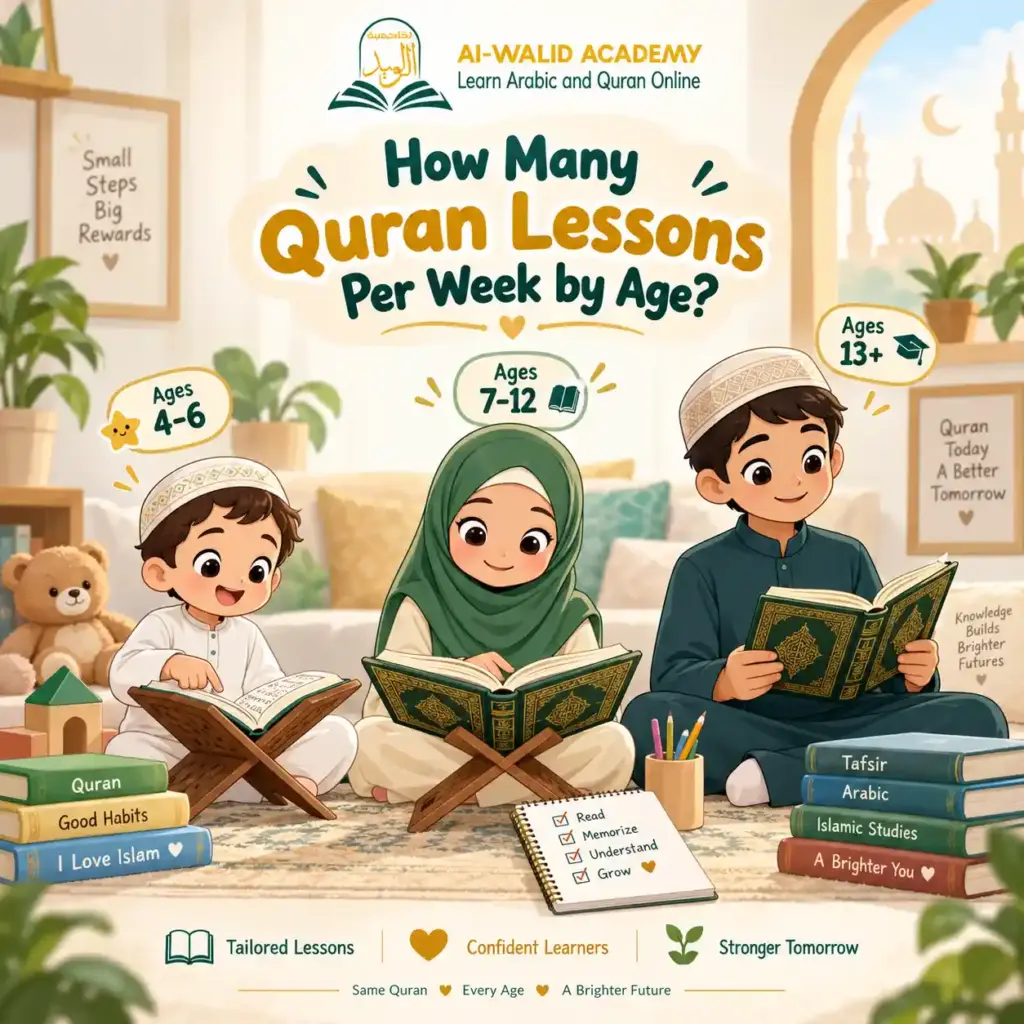
Age can help parents estimate How Many Quran Lessons Per Week for kids, but it should not be the only consideration. Attention span, ability, and learning goals are equally important.
Ages 4–6
Children between four and six often benefit from 1–3 Quran lessons per week, depending on the lesson length and their readiness.
At this stage, lessons should be:
- Short and engaging.
- Focused on basic Arabic letters and sounds.
- Supported by repetition.
- Interactive and suitable for young children.
- Followed by simple practice at home.
The goal is to build a positive relationship with Quran learning rather than rushing through large amounts of material.
Ages 7–9
For children aged seven to nine, 2–3 lessons per week can be a good starting point.
At this age, children may be ready for more structured learning, including:
- Noorani Qaida.
- Quran reading.
- Basic Tajweed.
- Short Surah memorization.
- Regular revision.
Parents can gradually increase the frequency if the child is comfortable and making consistent progress.
Ages 10–12
Children aged 10–12 may benefit from 2–4 Quran lessons per week, depending on their goals and school workload.
Children working on Hifz may require a more frequent schedule, while those focusing mainly on reading and Tajweed may need fewer sessions.
Ages 13 and Older
Teenagers can often manage 2–4 lessons per week, particularly if they have specific Quran learning goals.
For teens asking for more intensive memorization or Tajweed improvement, additional sessions may be useful. However, the schedule should still leave enough time for independent revision.
Contact us now to know the Best Age for learning Quran Online
How Many Quran Lessons Per Week by Learning Goal?
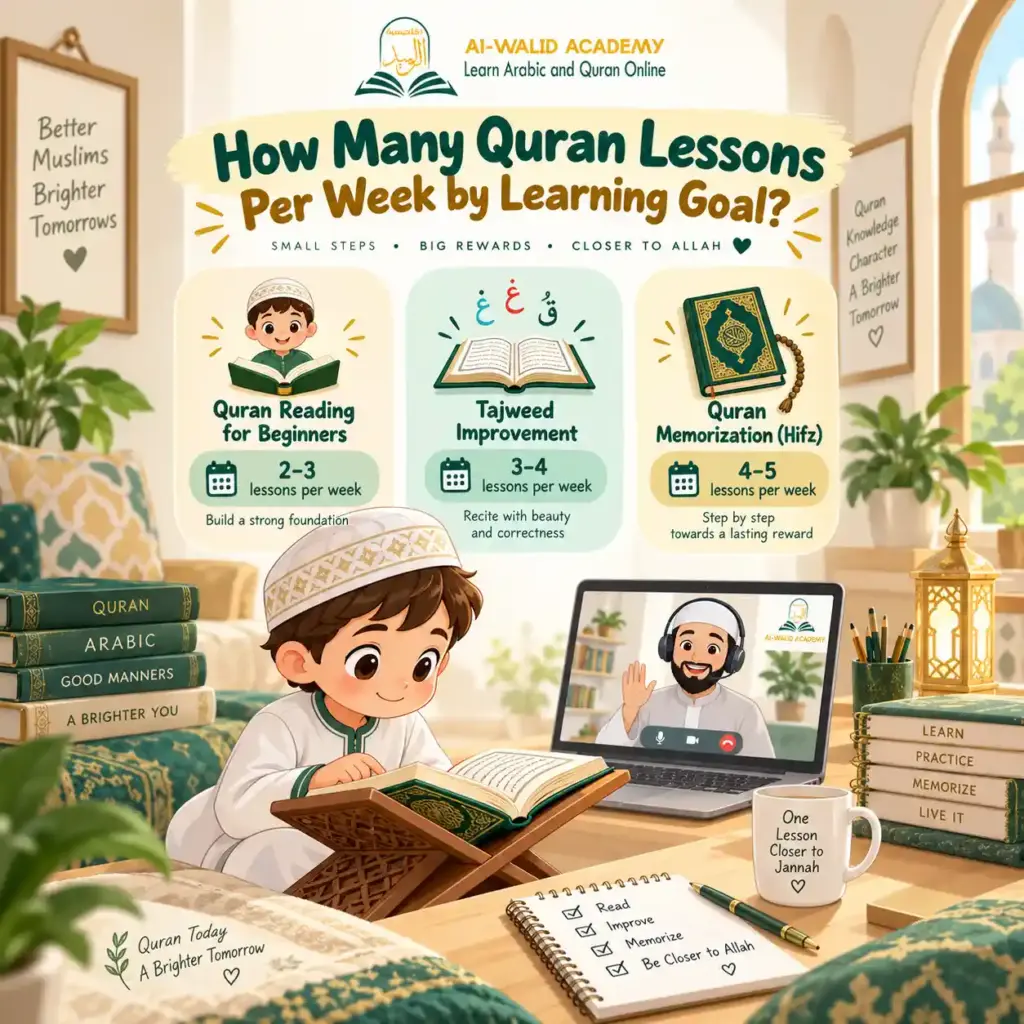
The answer to How Many Quran Lessons Per Week for Kids? changes significantly depending on whether the child is learning to read, improving recitation, or memorizing the Quran.
Noorani Qaida and Beginners
Beginners can usually start with 2–3 lessons per week.
The child needs enough time to understand new letters and sounds and practice them before moving forward. Repetition is particularly important during this stage.
Quran Reading and Tajweed
Children learning Quran reading and Tajweed may benefit from 2–3 lessons per week.
Regular lessons help the teacher identify pronunciation problems and correct mistakes before they become habits.
Daily short practice at home can complement these lessons.
Quran Memorization and Hifz
Hifz generally requires greater consistency than basic Quran reading. A child may need 3–5 lessons per week, depending on the memorization target and amount of home revision.
However, more lessons do not automatically mean faster memorization. Strong revision is essential for retaining previously memorized passages.
Important information about Quran Learning for Teenagers.
Is One Quran Lesson Per Week Enough for Kids?
One lesson per week can be enough for some children, especially if the child is a beginner, has a busy schedule, or receives regular practice at home.
However, parents should understand that progress may be slower with only one weekly session. When considering How Many Quran Lessons Per Week for Kids?, consistency between lessons becomes particularly important with a once-weekly schedule.
A child taking one lesson weekly can still make progress if they:
- Practice regularly at home.
- Review previous material.
- Follow the teacher’s instructions.
- Attend lessons consistently.
- Have realistic learning expectations.
For many children, however, two or three weekly lessons provide more continuity.
Are Two or Three Quran Lessons Per Week Better?
For many families, 2–3 Quran lessons per week offer a comfortable middle ground. This frequency gives children regular contact with their teacher while leaving enough time for school, family activities, and independent practice.
When parents ask How Many Quran Lessons Per Week for Kids?, two or three sessions are often a practical starting point because they provide:
- Consistent learning.
- Regular feedback from the teacher.
- Enough time for revision.
- A manageable family routine.
- Better continuity between lessons.
The exact choice between two and three sessions should depend on the child’s needs.
When Do Kids Need 4 or More Quran Lessons Per Week?
Some children may benefit from 4 or more Quran lessons per week, particularly when they have an intensive memorization target or need additional support.
A higher frequency may be suitable when:
- The child is following a structured Hifz program.
- The child has a specific memorization deadline.
- Frequent teacher feedback is needed.
- The child enjoys intensive Quran learning.
- The family can maintain adequate revision time.
However, parents should monitor the child’s energy and motivation. If additional lessons cause frustration or exhaustion, reducing the frequency may produce better long-term results.
Shorter, More Frequent Quran Lessons vs. Longer Weekly Lessons
When deciding How Many Quran Lessons Per Week for Kids?, lesson duration matters as much as lesson frequency.
For younger children, shorter and more frequent lessons can be more effective because they allow the child to concentrate without becoming tired.
For example:
| Schedule | Possible Benefit |
| 1 long lesson | Simple schedule but less frequent reinforcement |
| 2 lessons weekly | Good balance for many learners |
| 3 lessons weekly | Stronger continuity and practice |
| 4–5 short lessons | Useful for intensive memorization |
The best schedule is the one the child can follow consistently.
How Long Should Each Quran Lesson Be?
Lesson length should match the child’s age and concentration level.
A general approach may be:
- Ages 4–6: around 20–30 minutes.
- Ages 7–9: around 25–40 minutes.
- Ages 10–12: around 30–45 minutes.
- Teenagers: around 30–60 minutes, depending on the goal.
These are flexible guidelines rather than strict rules. A focused 25-minute lesson can be more productive than a longer session in which the child becomes distracted.
Should Kids Practice Quran Between Lessons?
Yes. Home practice is an important part of answering How Many Quran Lessons Per Week for Kids? because lessons alone may not provide enough repetition.
Parents can encourage children to spend a short amount of time reviewing:
- New letters or words.
- Previously learned verses.
- Tajweed rules.
- Memorized Surahs.
- Difficult pronunciation points.
Even 10–15 minutes of focused practice can help reinforce the lesson, depending on the child’s age and level.
Signs Your Child Has Too Many Quran Lessons
More lessons are not always better. Parents should watch for signs that the schedule has become too demanding.
Possible signs include:
- The child frequently complains about Quran lessons.
- Concentration decreases during classes.
- The child becomes unusually frustrated.
- Homework and schoolwork are affected.
- The child stops practicing willingly.
- Previously learned material is not being retained.
If these signs appear, reconsider How Many Quran Lessons Per Week for Kids? and discuss the child’s progress with the teacher.
How to Choose the Right Weekly Quran Schedule for Your Child
There are several steps parents can follow when creating a Quran learning routine:
- Identify the child’s current level.
- Set a realistic learning goal.
- Consider the child’s age and attention span.
- Choose a manageable number of weekly lessons.
- Include short home-practice sessions.
- Leave enough time for revision.
- Monitor progress and motivation.
- Adjust the schedule when necessary.
The right daily Quran memorization schedule should support steady progress without making Quran learning feel overwhelming.
Sample Weekly Quran Schedule for Kids
A simple schedule can help parents understand How Many Quran Lessons Per Week for kids in practical terms.
| Child’s Goal | Lessons Per Week | Home Practice |
| Beginner / Noorani Qaida | 2 | 10–15 minutes |
| Quran Reading | 2–3 | 10–20 minutes |
| Tajweed | 2–3 | 10–20 minutes |
| Hifz | 3–5 | Daily revision |
| Teen Quran learner | 2–4 | 15–30 minutes |
These examples should be adjusted according to the child’s individual learning pace.
How Al-Walid Academy Helps You Choose the Right Quran Schedule
At Al-Walid Academy, the goal is not simply to add more classes to your child’s week. The focus is on creating a learning experience that matches the child’s level, age, and Quran goals.
- Personalized learning plans based on your child’s age, level, goals, and learning pace.
- Flexible class schedules that fit around school and family commitments.
- One-on-one lessons for focused attention and personalized guidance.
- Qualified teachers who can adjust lessons according to your child’s progress.
- Regular progress monitoring to help maintain steady improvement.
- Different learning goals, including Quran reading, Tajweed, and memorization.
- Free trial class to help parents and children experience the learning approach before enrolling.
With personalized Quran lessons for Kids online, parents can work with qualified teachers to determine a suitable routine and monitor the child’s development.
Conclusion
The right answer to How Many Quran Lessons Per Week for Kids? should always consider quality, consistency, revision, and the child’s ability to learn comfortably.
Give your child a supportive start with Quran learning through Al-Walid Academy and choose a schedule that makes consistent progress easier.
FAQs
Can Kids Take Quran Classes Every Day?
Yes. Daily classes can work for some children, especially for intensive Quran memorization, as long as they have enough time for revision and rest.
Is It Better to Have Short Quran Lessons More Often?
Yes, shorter and more frequent lessons can help children stay focused and remember what they learn.
Is Five Quran Lessons Per Week Too Much for a Child?
Not necessarily. Five lessons may suit children with intensive Hifz goals, but the schedule should be reduced if the child feels tired or overwhelmed.
What Is the Best Number of Quran Lessons Per Week for Most Kids?
For many children, 2–3 Quran lessons per week provide a good balance between learning, practice, and other activities.