
You may have heard about Mashallah and inshallah meaning before—these two phrases have become a part of our everyday conversations, and each one of them carries a beautiful meaning that reflects faith, contentment, and hope.
You might be using them automatically, without being sure when to use each one or what the real difference between them is.
What Does Mashallah Mean?
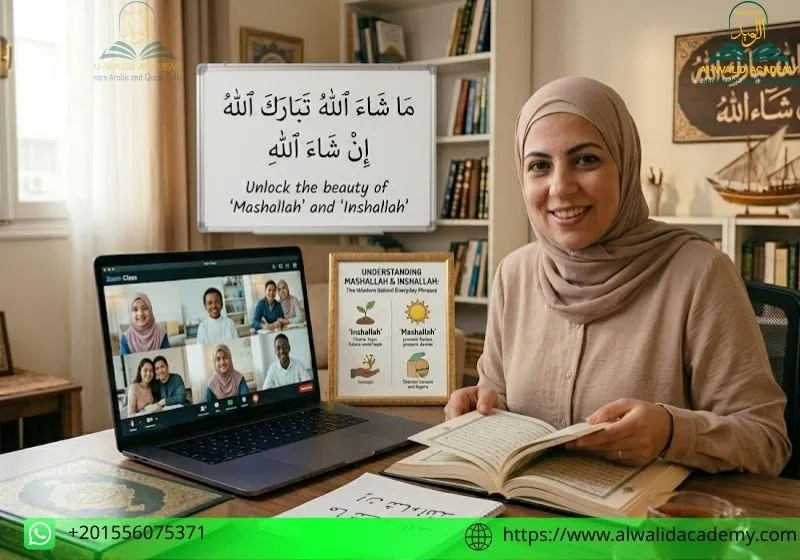
We say “Mashallah” (ما شاء الله) whenever we admire something special—like someone’s achievement, a beautiful moment, or a blessing we recognize as from God.
“Mashallah” literally means that something happened according to God’s will, and we use it both to admire the moment and to acknowledge that every blessing comes from Him.
It’s not just a compliment; it’s also a way to protect the good from envy. For example, if you see a child memorizing the Quran or someone succeeding at work, we should say “Mashallah”, it is like blessing them and reminding yourself and them that this is God’s favor, not just human effort.
If we look deeper, the word breaks down into:
- ما, “Ma” = What
- شاء, “Sha’a” = Willed / wanted
- الله, “Allah” = God
So the full meaning is: “What God willed has happened.”
This phrase is also in the Quran: “ “ما شاء الله لا قوة إلا بالله”” “Mashallah la quwwata illa billah”Surah Al-Kahf, (“What God willed—there is no power except with God”), reminding us that everything happens by God’s power, not just by human effort.
We say “Mashallah” in many situations, like:
- Seeing someone succeed → “Mashallah on your success.”
- Seeing something beautiful → “Mashallah, so beautiful!”
- When you hear happy or positive news, say “Mashallah, may Allah bless you even more” to express admiration and send a sincere prayer for continued blessings.
So, Mashallah combines admiration, gratitude, and humility all at once.
Exploring Quran courses online allows you to practice reading and also understand the meaning of Mashallah and Inshallah in context.
What Does Inshallah Mean?
We use ‘Inshallah’ or ‘إن شاء الله’ when mentioning plans or future matters. It means: “If God wills,” also it shows that you intend to do something but know that the outcome is in God’s hands completely.
The word is made of:
- إن, “In” = If
- شاء, “Sha’a” = Wills / wants
- الله, “Allah” = God
So the full meaning is: “If God wills.”
We use it in daily life for many situations, like:
- “I’ll finish the work tomorrow, Inshallah.”
- “I will travel soon, Inshallah.”
- “I will succeed, Inshallah.”
It’s not just a word; it shows reliance on God and reminds us that we are not fully in control of the future.
Some people use it as a polite way to say “no,” but the true meaning is deeper:
If God has planned something, it will happen. If it’s not in His plan, it won’t happen.
This gives a sense of peace because you understand that not everything depends on you, and that alone brings comfort.
In a Learn Quran Tafseer Online program, you’ll discover how Mashallah and Inshallah reflect God’s will in each verse.
What Is the Difference Between Mashallah and Inshallah?
The difference between Mashallah and inshallah meaning is easy to understand if you look at the time and meaning:
- “Mashallah” → for present or past (something already happened)
- “Inshallah” → for the future (something that hasn’t happened yet)
For example:
- “Mashallah on your success” → success already happened
- “You will succeed, Inshallah” → expected in the future
Each has a different purpose:
- “Mashallah” → admiration + gratitude + protection from envy
- “Inshallah” → intention + hope + reliance on God
There’s also “Alhamdulillah,” which is for general gratitude.
You can use them together naturally: “Mashallah on your achievement, Alhamdulillah, and you will continue, Inshallah.”
Quran Classes for Ladies provide both recitation skills and guidance on the spiritual use of Mashallah and Inshallah.
Simple Comparison between Mashallah and inshallah meaning
The difference between Mashallah and inshallah meaning is mainly about timing and meaning. Here’s a simple table that can help you distinguish between them:
| Aspect | Mashallah (ما شاء الله) | Inshallah (إن شاء الله) |
| Meaning | What happened by God’s will (present/past) | If God wills (future) |
| Usage | Admiration + thanks + envy protection | Reliance + hope + plans |
| Example | “Mashallah on your success” | “I’ll finish, Inshallah” |
| Purpose | Praise for existing blessings | Surrender to God’s will for what’s next |
| Quranic Root | Surah Al-Kahf: “ما شاء الله لا قوة إلا بالله…” | Surah Al-Kahf: “…إلا أن يشاء الله” |
Using them incorrectly can change the meaning. For example, don’t say “Mashallah on tomorrow’s trip”—you should say “Inshallah” instead.
You can also use both together naturally: “Mashallah on your success, and it will continue, Inshallah.” This balances admiration for what has happened with reliance on God for what will happen.
Joining an Arabic language Course helps you understand the daily use of Mashallah and Inshallah in conversation.
When Do You Say Mashallah?
You say “Mashallah” whenever you see or hear something admirable, especially a clear blessing.
It is used in:
- Special occasions (success, wedding, birth)
- Social media (seeing someone’s achievement)
- Daily life, even in simple things
The purpose is not just admiration but also:
- Thanking God for the blessing
- Protecting it from envy
- Spreading positive energy
So always say it sincerely, not just as a routine, because the real value is in intention.
When Do You Say Inshallah?
“Inshallah” is said for anything about the future, whether a plan, promise, or hope.
Clear examples:
- “I’ll call you tomorrow, Inshallah.”
- “We will visit next week, Inshallah.”
- “I will achieve my goal, Inshallah.”
It’s also used in:
- For work or tasks→ you can say “I’ll submit the report tomorrow, Inshallah” to show commitment while trusting God’s timing.
- Prayer → “May God heal you, Inshallah”
- For upcoming plans→ you can say “I’ll begin the project soon, Inshallah” to express hope and trust in God’s will.
Using it shows humility and submission to God, and prevents claiming certainty over things not guaranteed.
The important point:
Remember, saying “Inshallah” isn’t a way to postpone responsibilities—it’s meant to show reliance on God while keeping your intentions sincere. Its true meaning is having a sincere intention while recognizing that success depends on God.
When used correctly, it brings more peace, balance, and trust between taking action and relying on God.
Beginners in Learning Arabic for Beginners can connect everyday phrases to the meaning of Mashallah and Inshallah.
Mashallah and Inshallah Meaning in English
Mashallah literally means “God willed it” or “As Allah wished.” We say it to express admiration or gratitude for something that has already happened while acknowledging God’s blessing and protection.
Inshallah literally means “If God wills.” We say it when talking about future events to express intention, hope, and trust in God.
Literal translation is helpful, but the true meaning becomes clear when we use these phrases sincerely in everyday life.
Examples of Mashallah and Inshallah in Daily Life
Here are simple examples to make it clear:
Mashallah:
- Someone succeeds in an exam or project → “Mashallah on your success.”
- A child laughs or memorizes the Quran → “Mashallah, may God protect him.”
- Seeing a new house or car → “Mashallah, it’s beautiful.”
Inshallah:
- Planning to finish work tomorrow → “I will finish the work tomorrow, Inshallah.”
- Planning to travel next week → “I’ll travel next week, Inshallah.”
- Setting a personal goal → “I will achieve my goal, Inshallah.”
These examples show the difference between past/present (Mashallah) and future (Inshallah), and between praise and reliance on God.
Common Mistakes When Using Mashallah and Inshallah
Some mistakes to avoid:
- Saying “Mashallah” for something that hasn’t happened yet → use “Inshallah” instead.
- Using “Inshallah” as an excuse to delay tasks → it’s meant for reliance, not procrastination.
- Saying the phrases without sincere feeling → the intention should be genuine.
- Mixing them up → e.g., “Inshallah on your success” is incorrect.
Focusing on correct timing, meaning, and intention ensures the phrases are used properly and meaningfully.
Why Do Muslims Say Mashallah and Inshallah?
Muslims use “Mashallah” and “Inshallah” for several important reasons:
- To show sincere admiration or appreciation for God’s blessings (Mashallah)
- To show trust in God and recognize that the future is in His hands (Inshallah)
- To protect blessings from envy or the evil eye
- To bring calmness, humility, and contentment in daily life
These phrases are not just words—they are a way of living faith in everyday speech, making conversations full of gratitude, humility, and spiritual awareness.
A Quran Recitation Course teaches not only tajweed but also the proper context for saying Mashallah and Inshallah.
When to Use Alhamdulillah and Mashallah?
Here’s a simple breakdown of how and when to use Alhamdulillah and Mashallah in daily life:
- Alhamdulillah (الحمد لله)
- You can say “Alhamdulillah ” to thank Allah for the blessings in your life or for anything good that has happened recently.
- Examples:
- As you open your eyes in the morning, you say: “Alhamdulillah for the blessing of a new day.”
- Passing an exam: “Alhamdulillah for the success.”
- Purpose: Express personal gratitude to Allah in all circumstances, good or bad.
- Prophet Muhammad said:
- “Alhamdulillah, whose blessing completes all good deeds” (for good things).
- “Alhamdulillah in every condition” (for challenges).
- Mashallah (ما شاء الله)
- Use it when you admire or appreciate something good happening to someone else.
- Examples:
- Seeing a talented child or a beautiful house: “Mashallah, may Allah bless it.”
- Noticing someone’s achievement: “Mashallah on your success.”
- Purpose: Express admiration while protecting the person or blessing from envy or the evil eye.
- Using Both Together
- You can combine them naturally for a complete and meaningful expression.
- Example: “Alhamdulillah for the health, Mashallah on your progress.”
- Here, you thank Allah for the blessing and also admire or protect the person’s achievement.
So, using Alhamdulillah and Mashallah correctly makes your daily speech filled with gratitude, admiration, and spiritual blessing.
How do you respond to Inshallah?
When someone says “Inshallah” about a plan or promise, the best way to respond is with a smile or any positive words like:
- “May Allah grant you success”.
- “May God make it easy”.
This shows the speaker that you agree and are praying for their success. For example, if they say, “I’ll call you tomorrow, Inshallah,” you can reply: “Inshallah, I’ll be waiting.” You don’t have to repeat the same word; what matters is keeping the response positive and prayerful, maintaining the sense of trust in God.
If the phrase is part of a prayer like “May Allah heal you, Inshallah,” you can respond with: “Ameen, O Lord” or “May Allah make it good”, keeping the spiritual tone of the conversation.
Should I say Inshallah or Mashallah?
The difference Mashallah and inshallah meaning depends on timing and context:
- Inshallah: Use it when talking about something that will happen in the future, like plans or hopes, to show reliance on God. Example: “I’ll finish the project tomorrow, Inshallah.” → shows trust and reliance on God.
- Mashallah: Use it when admiring something that has already happened or exists now, like an achievement, beauty, or blessing, to show appreciation and protect it from envy. Example: “Mashallah, the house looks amazing.”→ shows admiration and protects the blessing.
Never use one in place of the other. If you want to combine them naturally, you can say: “Mashallah and Inshallah” → this makes your words spiritually complete, including gratitude, prayer, and protection of blessings.
Read also about: Definition of Subhanallah
What to reply to Mashallah?
When someone says “Mashallah,” polite and prayerful replies include:
- “Jazak Allah khair” (May Allah reward you)
- “Barak Allah feek” (May Allah bless you)
- “May Allah increase you in goodness.”
These responses show that you accept the compliment and pray for the speaker as well, while also protecting from envy. For instance, if someone says “Mashallah on your success,” you can respond with “Allah bless you” or “Jazak Allah khair” to show gratitude and return the prayer.
The key is to reply sincerely from the heart, not just out of habit, so the blessing reaches both parties.
How to use Mashallah and Inshallah correctly?
To use Mashallah and Inshallah correctly, focus on the difference between present and future:
- Mashallah: Say it when you see something good or a success that has already happened, like a child memorizing the Quran, someone achieving a goal, or something beautiful. Example: “Mashallah on his Quran memorization” → this shows admiration while also protecting the blessing from envy.
- Inshallah: Use it when talking about future plans or promises. Example: “I will finish the task, Inshallah” → this reflects reliance on God and submitting to His will.
The key is timing and intention: the first is for the present with gratitude, the second is for the future with hope and trust. Using them incorrectly can distort the meaning. Use them sincerely, not as a routine.
Example: “Mashallah on your achievement, and Inshallah it will continue” → this makes your words balanced and blessed.
When attending Quran Classes For Adults, learning the proper use of Mashallah and Inshallah adds depth to your daily practice.
What to say instead of Inshallah?
You can use alternatives to Inshallah depending on the context while keeping the sense of reliance on God:
- Bi’ithnillah (By God’s permission): when someone else is doing something, e.g., “He will finish it, Bi’ithnillah.”
- Insha’ta (If You Will): in prayers or wishes.
- Rabbena Yesserha (May God make it easy): expressing hope with trust in God.
- Allahu Akbar (God is Great): reflects reliance on God in a general way.
The important thing is that the alternative expresses genuine trust in God, not just empty words.
Learn Mashallah and Inshallah Meaning the Right Way with Al-Walid Academy
At our academy, we don’t just explain Mashallah and inshallah meaning, we teach you how to use them correctly in your daily life in a practical and faith-based way.
- Learn the right way: Understand the difference between Mashallah for admiration and protection from envy, and Inshallah for trusting God in future plans.
- Real-life examples: Every lesson includes daily situations where you can apply these phrases—from school, work, to family life.
- Hands-on practice: Interactive exercises to help you confidently turn words into daily habits.
- Continuous support: Experienced teachers are always available to answer your questions and guide you step by step.
- Blessed speech: Learn how to make your words full of gratitude, appreciation, and mutual prayers that protect blessings.
Start now! Register at our academy and begin using Mashallah and Inshallah correctly every day, learning in a fun and practical way that reflects your understanding and faith.
FAQs
Can Mashallah and Inshallah be used together?
Yes, you can naturally combine them, for example: “Mashallah on your success, and Inshallah it continues”, which shows admiration and reliance on God at the same time.
How should I reply when someone says Mashallah?
Good responses include: “Jazak Allah khair”, “Barak Allah feek”, or “May Allah increase your blessings”, to accept the compliment and pray for goodness.
How should I respond if someone says Inshallah?
You can reply with “Inshallah”, “May Allah make it easy”, or “Ameen”, showing optimism, prayer, and reliance on God.
Is Mashallah used for personal blessings, too?
Yes, you can say Mashallah for your own blessings or others’, like health, success, or achievements, while thanking Allah.
Can Mashallah prevent envy?
Using Mashallah when noticing blessings helps protect them from envy because it acknowledges that all good comes from Allah.
Can Inshallah be used for any future plan?
Yes, you can say Inshallah for any future plan, big or small, as long as it’s said sincerely with reliance on God.