Raising children who are educated, religious, and of good moral character has become a task requiring considerable effort in our Arab societies, and the challenge becomes even greater when this is expected in foreign cultures. With the diversity of religions, ideas, and unrestricted freedoms, the task becomes more difficult and requires constant attention and redoubled effort.
In this comprehensive article from the Oled Academy, we offer comprehensive advice and best practices for How to Raise Muslim Children in the West.
How to Raise Muslim Children in the West
A lot of our kids live with their parents in the West, and we know lots of these countries are not Muslim, so in this guide you will know how to raise your kids as good muslims in the West. Follow the next points:
Build a Strong Muslim Identity Early
To ensure that a child does not lose their way or become distracted when engaging with a community that differs in terms of religion, customs and traditions, efforts must be made to build their character and Islamic identity from an early age, through
Teach Children Who Allah Is
Allah, the Most High, is closer to our souls and hearts than anyone else; when this great truth of faith is conveyed to children from a young age, their faith grows many times over.
We must therefore teach them about Allah, the Almighty, and His Names and Attributes to the extent that they can comprehend.
For example:
- We should speak of Allah’s mercy and His support for us.
- The many blessings He bestows upon us through no power or strength of our own.
Make Islam Part of Daily Life
One of the greatest aspects of the Islamic faith is the constant connection with God throughout the day and hour.
- The obligatory prayers are performed five times a day, and you may perform as many voluntary prayers as you wish.
- The obligatory fast lasts for one full month each year to renew our spirits and provides a continuous opportunity for change; you may fast as many days as you wish during the rest of the year.
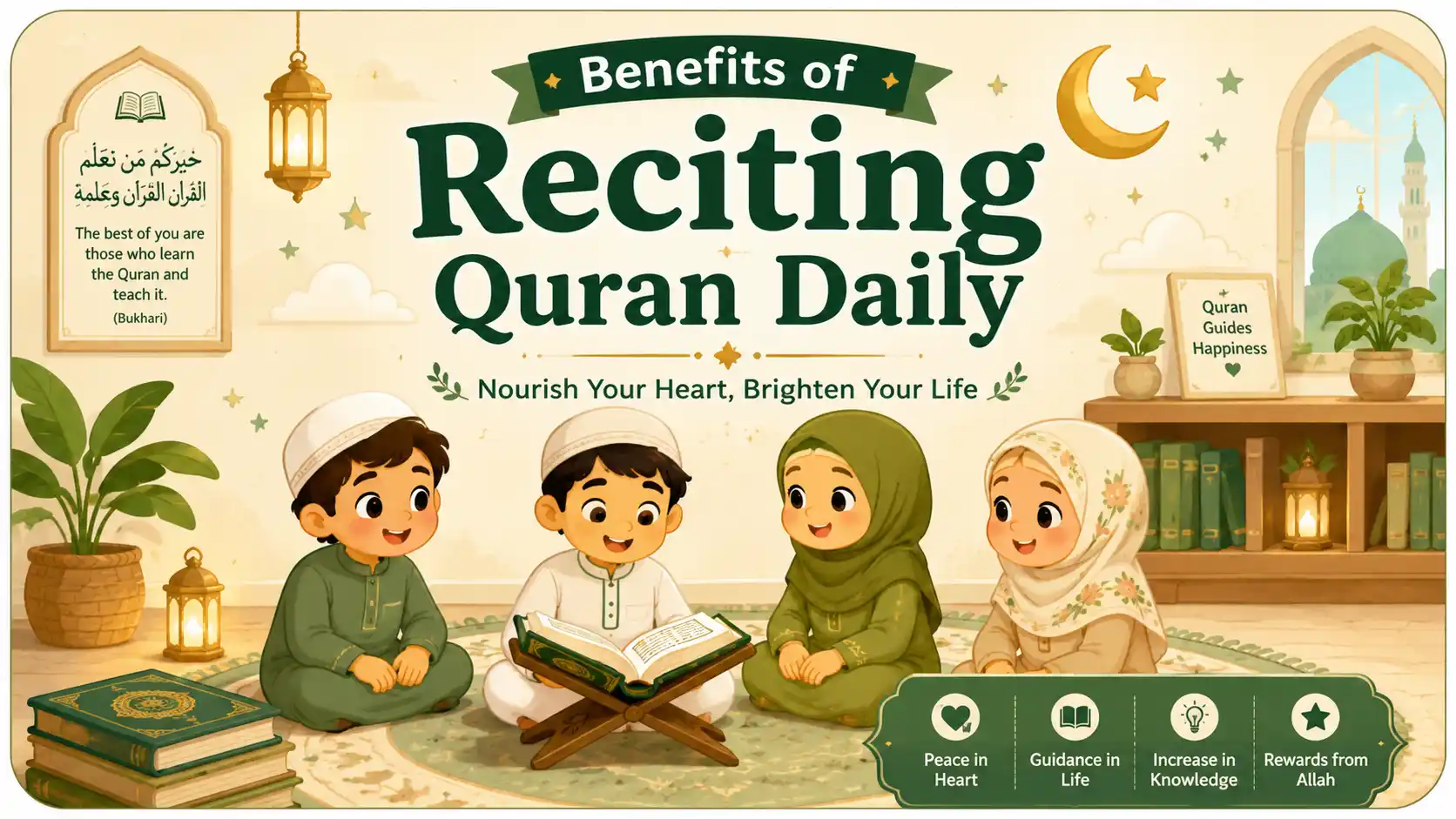
- It is recommended to read a Juz of the Qur’an daily, and you can reach How Many Juz in Quran you wish.
- Salah, Rahim, and visiting relatives are obligations from Allah the Almighty.
- Zakat is obligatory after Ramadan and also on wealth and gold under certain circumstances, but you may give charity whenever you wish and in whatever amount you prefer.
When reflecting on all these acts of worship, one realises that the Islamic faith is not merely a set of obligatory acts of worship, but rather a way of life upon which we must raise our children from an early age.
Use Quran, Dua, and Stories of the Prophets
Young children love role models and enjoy heroic stories, so when we tell them stories from the Qur’an about the prophets or righteous men, a love of religion and a love of God are instilled in them through these stories, which helps to instil faith and good morals in children’s hearts.
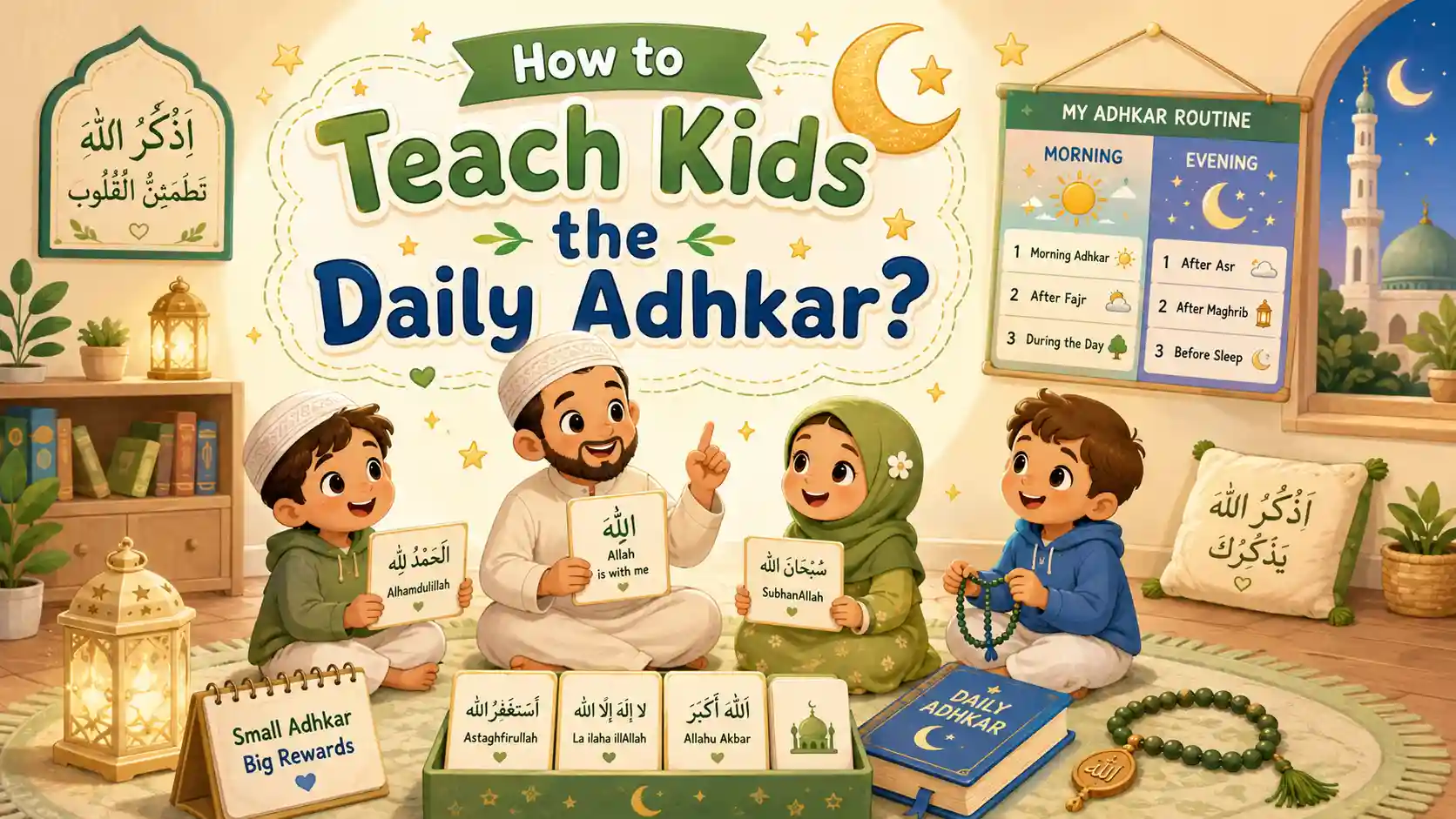
Teaching them Dua to Memorize Quran or supplication before and after meals, or when entering and leaving the toilet, may seem simple, but it fosters within them a connection to Allah the Almighty in all aspects of their lives.
- Learn Quran Tafseer Online with Join Al-Walid Academy and enjoy gaining an understanding of the Holy Qur’an whilst reciting it
Start Islamic Education at Home
How to Raise Muslim Children in the West should begin at an early age so that the child develops a stronger connection to their faith and their spirit of faith is strengthened.
Teach Basic Beliefs in Simple Words
There are some religious fundamentals that children should know, including:
What is Islam?
It is a divine religion revealed by God to our Prophet Muhammad, in which He has commanded us to follow certain obligations and avoid certain prohibitions so that we may enter Paradise; those who follow the Islamic faith are called Muslims.
Who is Allah?
Allah, the Almighty, is the One who created us and the entire universe; He is the One who cares for and provides for all His creatures, and we must obey Him so that we may earn His pleasure and enter Paradise.
Read more: Islamic Education at a Young Age
Who is the Prophet Muhammad, the Messenger of God?
He is the Seal of the Prophets and the most beloved of all mankind to God Almighty; God revealed the teachings of Islam to him through the Angel Gabriel. He was born in Mecca and migrated to Medina, and was known for his mercy, humility, tolerance and love for the poor and the needy.
- Don’t miss our Seerah course and find out more about the Messenger of Allah, may He be exalted.
What is the Qur’an?
The Qur’an is the Word of God Almighty, which He revealed to His servant Muhammad so that we may learn from it what is commanded and avoid what is forbidden, and so that it may be the path we follow to enter Paradise.
What is Ramadan?
Ramadan is the month in which Allah has made it obligatory for us to fast from dawn until sunset, meaning that we abstain from food and drink during this time.
It is also a time when acts of worship, such as prayer and reciting the Qur’an, are performed frequently, which greatly strengthens our spirituality and faith.
Look at: Islamic Questions and Answers For Kids
Introduce Short Surahs and Daily Duas
How to Raise Muslim Children in the West must begin with 5 Surahs to Recite Daily for young children, particularly Surah al-Fatihah, as it forms the basis for another pillar of Islam, which is prayer. The surahs should also be learnt by heart, accompanied by a simple explanation that a child can understand, thereby strengthening their faith.
As for Duas, it is an act of worship which angers Allah, the Most High, if His servants neglect it; therefore, children must be encouraged to practise it from an early age.
For example:
The Duas recited before and after eating:
- Before eating: ‘Bismillahir-Rahmanir-Rahim’ (In the name of Allah, the Most Gracious, the Most Merciful)
- Afterwards: ‘Al-hamdu lillah alladhi a’ta’na wa saqa’na wa ja’ala-na muslimun’ (Praise be to Allah, who has fed us, given us drink, and made us Muslims).
All of this helps the child to develop a bond with their Lord from an early age, whilst also strengthening their faith and their attachment to religion.
Explain Islamic Manners Through Real Situations
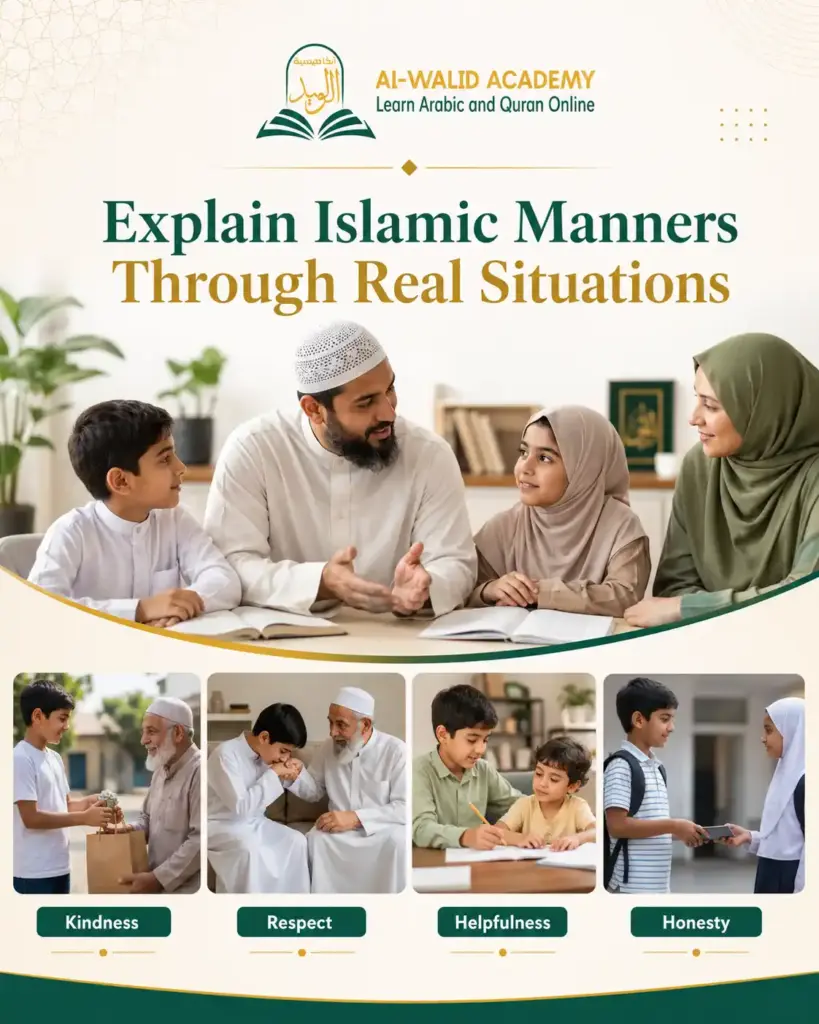
Children’s primary teachers are real-life situations, as children are capable of absorbing and imitating everything. The best way to make the most of this is to teach them good morals. For example:
- If you want to teach them about compassion, help them to feed stray animals on the street.
- If you want to teach them responsibility, get them to look after a plant and water it regularly.
- If you want to teach them generosity, get them to share their clothes and toys with orphaned children.
And so on with other good moral values that children acquire from real-life situations.
Know more about: How to study Islam at home
Balance Islamic Values with Western Culture
Muslim children can benefit from positive qualities found in Western societies, such as discipline, hard work, and respect for laws. However, these qualities should complement—not replace—their Islamic beliefs and values. The following practical tips explain how to raise Muslim Children in the West while helping them maintain a strong faith, confident identity, and balanced character.
Choose the Right School Environment
Children spend most of their day at school, so it is important to ensure you choose a school that provides a safe environment, an appropriate standard of education and, above all, one that respects religious and cultural diversity.
It is therefore advisable to choose a school with a sufficient number of Muslim pupils and one that allows religious practices to be observed freely.
Protect Children from Peer Pressure
Bad friends are the first step towards going astray, especially when it comes to religion. Children must therefore be taught that not everything their friends do is necessarily right. Religion must be the primary yardstick and guide for our choices, and parents must remain very close to their children to encourage them and give them a sense of security.
Build a Muslim Community Around Your Child
- It will be very effective to involve children in all activities related to the Islamic faith, such as praying regularly at the mosque and attending lessons.
- Make friends with Muslim children, which helps them feel a sense of belonging.
- Taking part in charitable organisations and competitions to memorise the Holy Qur’an.
Teach Children to Be Confident About Being Muslim
Children must learn from an early age to take pride in their faith and in the fact that they were born Muslim.
They should practise their religious rituals with pride and freedom, and present themselves in the Islamic manner prescribed by Allah and His Messenger, whilst responding with the utmost humility and confidence to any questions they may be asked, such as those concerning fasting, the hijab and so on.
Make Salah, Quran, and Islamic Manners a Habit
Making prayer, the Qur’an and Islamic ethics part of our daily routine
All our Islamic practices such as prayer, reading the Qur’an, and acting in accordance with good morals must be an integral part of our daily routine; indeed, our day should be structured around them, so that children are brought up from a young age to adhere to obedience and good morals.
- Enroll in the Islamic Studies Course at Al-Walid Academy and deepen your understanding of Islam, its teachings, and the correct way to perform acts of worship. Start your learning journey today.
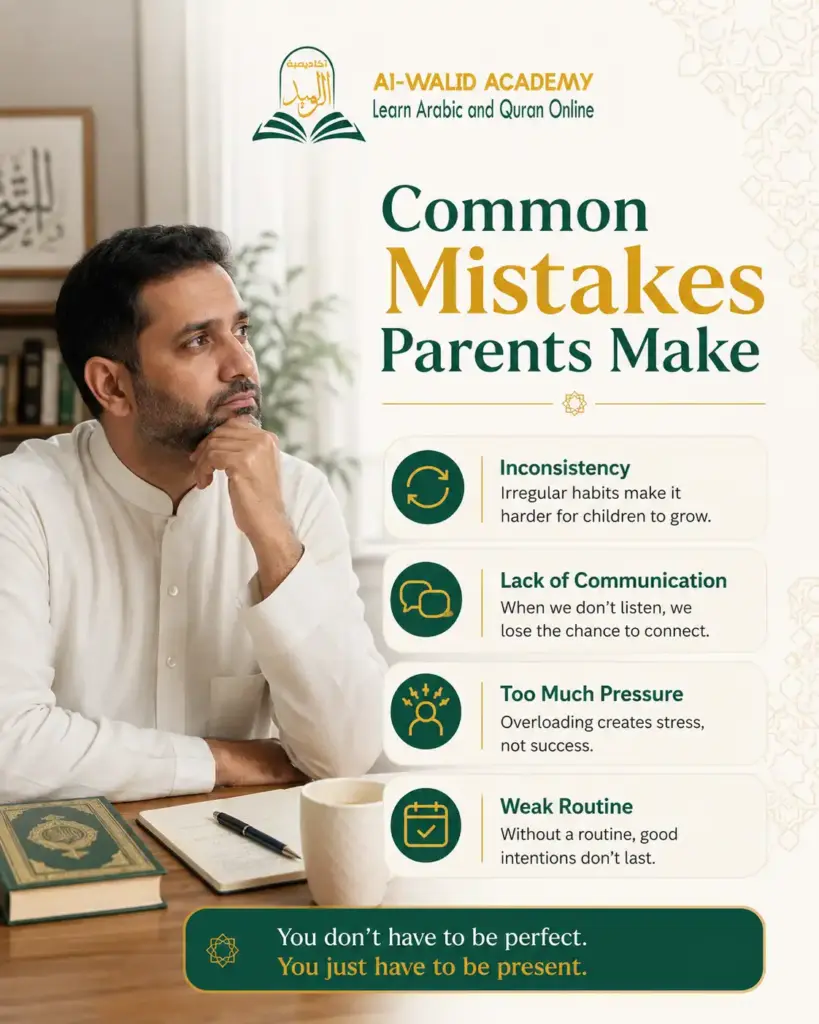
Common Mistakes Parents Make
Teaching Islam Through Fear
When the Prophet, peace be upon him, instructed us to teach children to pray, he said that we should begin teaching them from the age of seven and that, from the age of ten, they should be disciplined in the event of any negligence.
This is what must be borne in mind when teaching children, as the process takes time and requires great patience. We must therefore completely avoid any use of violence or fear that might cause children to develop a dislike of religion and worship.
Starting Islamic Education Too Late
The earlier one starts How to Raise Muslim Children in the West, the greater and more profound the results will be, and these will become second nature; the reverse is also true: if a child does not get used to The Five Pillars of Islam fasting, praying and giving charity from a young age, it may become impossible for them to adopt these acts of worship in later life.
Not Explaining the Reason Behind Islamic Rules
Treating Islam merely as a set of commands, prohibitions and rules to be followed without any explanation or understanding of the reason behind them may cause children distress in most cases; therefore, we must teach them the significance of every act of worship we perform. For example:
- Fasting, so that we may empathise with the poor and the needy.
- Zakat al-Fitr, so that the poor may rejoice in the festive atmosphere and buy new things.
- Prayer, so that we may remain in constant communication with Allah throughout the day.
Leaving Children Without Muslim Friends
Since parents cannot be with their children every moment, outside influences naturally play a role in shaping their thoughts and behavior. Living in an environment with limited exposure to Islamic teachings may gradually affect a child’s faith, identity, and daily habits in several ways:
- They begin to imitate their friends in ways that are not in keeping with our Islamic values and customs.
- It also makes them less confident in practising their religious rituals, as they feel like outsiders.
How does Al-Walid Academy help you teach your children about the Islamic faith?
Al-Walid Academy specialises in the sciences of the Qur’an and Islamic jurisprudence. With its long-standing experience in education, enrolling your children here has become essential for learning, as
- The Academy employs teachers who are specialists in working with children.
- We employ the latest modern methods in teaching and education.
- We teach children through engaging methods and practical examples.
- We provide a deeply faith-based environment that encourages children to remain committed and avoid distractions.
- We maintain regular contact with parents and teach them how to interact with their children.
With all these advantages, Al-Walid Academy has proven its worth in How to Raise Muslim Children in the West.
Conclusion
Ultimately, we can say that our children are a great trust entrusted to us, and making a significant effort in this regard is of How to Raise Muslim Children in the West utmost importance, as it helps children to engage with different societies and cultures whilst upholding the teachings of Islam and distinctive Arab traditions.
FAQs
At what age should parents start teaching their children about the Islamic faith?
Setting a good moral example begins from the very first month, as children imitate what they see; you can also start playing the Holy Qur’an in their presence. As for formal education, this begins at the age of three or four.
How can children remain committed to the Islamic faith whilst living in Western cultures?
It is not difficult, but it does require a great deal of effort from the very beginning to teach their children about the Islamic faith, to strengthen their bond with their faith, and to surround them with an Islamic environment.
Why is Islamic education important for Muslim children in the West?
Islamic education helps children understand their beliefs, practise worship correctly, answer questions about their faith, and develop a confident Muslim identity.
How can Muslim parents discuss difficult topics with their children?
Parents should create a safe environment where children can ask questions without fear. Answers should be honest, age-appropriate, and based on Islamic teachings.
How can Muslim families create an Islamic environment at home?
Families can pray together, read the Quran, celebrate Islamic occasions, share stories of the Prophets, practise good manners, and make Islamic learning part of everyday life.
Should Muslim children have non-Muslim friends?
Yes. Muslim children can build respectful friendships with non-Muslims while maintaining their Islamic beliefs, values, and boundaries. Parents should teach them kindness, confidence, and good character.